The short answer
Septic system repair makes sense when one component has failed, such as a baffle, lid, filter, pump or section of pipe, and the tank and drain field are sound; replacement makes sense when the drain field has failed, the tank is badly damaged or the system is near the end of its life. Angi puts the average septic repair at $1,828 and a new system at $8,016 in 2026, and puts septic system lifespan at 15 to 40 years. Local rules can force the decision: in Massachusetts, a system that fails a Title 5 inspection must be upgraded within 2 years.
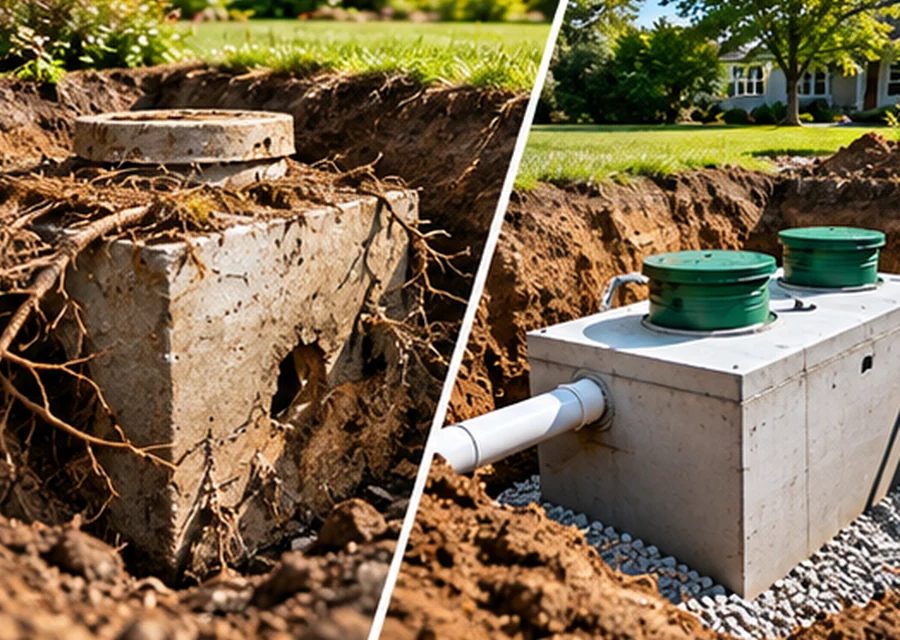
Septic system repair is the right choice when one component has failed and the tank and drain field are still sound; septic system replacement is the right choice when the drain field has failed, the tank is badly damaged or the system has reached the end of its useful life. The decision comes down to three things: what failed, how old the system is and whether a local rule requires an upgrade.
Angi puts the average septic repair at $1,828 and a new septic system at $8,016 in 2026. That gap makes repair tempting, but a repair on a worn-out system can turn into paying for both.
How do you decide between septic repair and replacement?
Decide between septic repair and replacement by working through four questions in order.
- What exactly failed? A diagnosed, single-part failure (a baffle, a pump, a lid, a pipe) points to repair. A failing drain field or a structurally damaged tank points to replacement.
- How old is the system? The EPA puts average septic system lifespan at 15 to 40 years. A repair on a system near the top of that range buys less time.
- How often has it failed? Repeated repairs in a short period suggest the system as a whole is wearing out.
- Does a rule force an upgrade? A failed inspection at sale, a permit for an addition or a health department order can require replacement regardless of cost.
If the answers are “one part, young system, first problem, no rule,” repair. If they are “drain field, old system, repeat failures or a regulatory order,” get replacement quotes.
Which septic problems are repairable?
Most septic problems involving a single mechanical or structural component are repairable. Angi’s 2026 cost data shows typical ranges for common repairs:
| Repair | 2026 cost range (Angi) |
|---|---|
| Lid | $150 to $500 |
| Filter | $200 to $300 |
| Baffles | $300 to $900 |
| Pump | $250 to $1,000 (repairs $250 to $400; full replacement $1,000+) |
| Line | $1,000 to $4,200 (partial line repair about $1,500) |
| Inspection | $100 to $1,175 |
| New tank | $3,000 to $9,500 |
Tank components
A broken baffle, a cracked lid, a clogged effluent filter or a damaged inlet or outlet pipe are usually repairable without replacing the system. MassDEP’s Title 5 program treats this kind of damage as fixable: a cracked septic tank or a broken pipe can receive a conditional pass once it is repaired and approved by the Board of Health.
Pumps and controls
A failed effluent pump, float or alarm is a repair, not a reason to replace the system. Angi puts most pump repairs at $250 to $400 and full pump replacement at $1,000 or more in 2026. A pump failure is fixed at the pump tank without touching the rest of the system.
Pipes and lines
A crushed, root-damaged or disconnected pipe can be repaired or replaced in sections. Angi puts partial line repair at about $1,500 and new line installation at $50 to $250 per linear foot.
When does a septic system need to be replaced?
A septic system needs to be replaced when the drain field can no longer absorb effluent, the tank has failed structurally or the system has reached the end of its expected life. Angi notes that replacement is typically needed when the tank fails or reaches the end of its useful life.
Drain field failure
A failed drain field is the most common reason a repair turns into a replacement, because the soil itself has stopped accepting water. MassDEP’s Title 5 program does not allow a conditional pass for soil absorption systems or cesspools, which reflects how hard drain field failures are to fix with a part. Bob Vila reported drain field repairs costing $2,000 to $15,000 in a 2023 article, and Angi puts drain field replacement at about $7,000 in 2026. Our drain field replacement cost guide breaks this down.
Tank failure
A tank with major cracks, collapse or corrosion usually needs replacement. Angi puts a new tank at $3,000 to $9,500 in 2026, including the tank itself at about $600 to $4,000 plus $500 to $1,000 in materials such as fill and gravel. Steel tanks have the shortest expected life; Angi lists them at 15 to 20 years.
Warning signs that point to replacement
The signs that a whole system may need replacement include sewage backing up into the house, pooling water or sewage over the drain field, persistent odors, slow drains throughout the home and unusually green grass over the drain field. Bob Vila lists all of these as signs it may be time to replace. Many of them can also come from a single repairable fault, so get a diagnosis first. Our signs of septic system failure guide covers each one.
How much does septic repair cost vs replacement in 2026?
Septic repair costs a fraction of replacement in most cases. Here is how the published figures compare:
| Cost | Figure | Source |
|---|---|---|
| Average septic repair | $1,828 (range $627 to $3,041) | Angi, 2026 |
| Average new septic system | $8,016 (range $3,590 to $12,463) | Angi, 2026 |
| Septic replacement, average | $6,000 (range $2,000 to $20,000) | Bob Vila, 2023 |
| Drain field replacement | about $7,000 | Angi, 2026 |
| Permits for full replacement | $460 to $2,770 | Angi, 2026 (repair guide) |
| Perc test | $700 to $2,000 | Angi, 2026 (installation guide) |
Replacement cost by system type
Replacement cost depends heavily on what kind of system the site needs. Angi’s 2026 figures:
| System type | Replacement cost (Angi, 2026) |
|---|---|
| Anaerobic (basic gravity) | $3,000 to $8,000 |
| Chamber | $5,000 to $12,000 |
| Drip | $8,000 to $18,000 |
| Aerobic (ATU) | $10,000 to $20,000 |
| Mound | $10,000 to $20,000 |
If soil conditions have changed or rules have tightened since the original system went in, the replacement may need to be a different, more expensive type. A new soil test may be part of the job; see our septic perc test guide. More detail is in septic tank replacement cost and septic repair cost.
How does septic system age affect the decision?
Septic system age shifts the decision toward replacement as the system approaches the end of its expected life. The EPA and Angi both put the average lifespan at 15 to 40 years, and Angi breaks it down by tank material:
| Tank material | Expected lifespan (Angi) |
|---|---|
| Steel | 15 to 20 years |
| Concrete | 20 to 40 years |
| Plastic or fiberglass | 30 to 40 years |
A $1,500 repair on a 10-year-old concrete system is a clear call. The same repair on a steel tank at 20 years is a harder one, because the next failure may not be far off. Our how long do septic systems last guide covers what shortens and extends system life.
What regulations can force septic replacement?
Septic regulations can require replacement even when a repair would be cheaper. Common triggers include a failed inspection at property sale, a building permit for an addition or more bedrooms, and an order from the local health department.
Massachusetts is an example with written deadlines. According to MassDEP, a system that fails a Title 5 inspection must be upgraded within 2 years unless the Board of Health or MassDEP authorizes another schedule, and an owner who decides not to sell after a failed inspection still has to fix the system. Title 5 inspections are also triggered by changes that require a building or occupancy permit and by changes to a building’s footprint.
Rules differ by state and county. Check with your local health department before choosing a repair, and see our septic licensing pages for state agencies.
How can you avoid premature replacement?
You can avoid premature replacement with routine inspection and pumping and by protecting the drain field. The EPA recommends inspecting a household system at least every three years, pumping every three to five years, keeping vehicles off the drain field and keeping roof drains and sump pumps away from it.
Get a diagnosis from a licensed septic contractor
The repair-or-replace decision depends on an accurate diagnosis, so start with a licensed septic contractor who can inspect the system and explain what failed. Find a licensed septic company near you, check the contractor’s license with the issuing agency, and get written quotes for both options when the answer is not clear-cut.
Common questions
Is it better to repair or replace a septic system?
Repairing a septic system is better when a single component has failed and the tank and drain field are sound. Replacing a septic system is better when the drain field has failed, the tank is structurally damaged or the system is near the end of its expected life, which Angi puts at 15 to 40 years.
How much does septic repair cost compared with replacement?
Angi puts the average septic repair at $1,828 in 2026, with most repairs between $627 and $3,041. Angi puts a new septic system at $8,016 on average, with a typical range of $3,590 to $12,463, and aerobic or mound systems at $10,000 to $20,000.
Can a failed drain field be repaired?
A failed drain field can sometimes be repaired, but often needs replacement. Bob Vila reported drain field repairs costing $2,000 to $15,000 in 2023, and Angi puts drain field replacement at about $7,000 in 2026. A contractor should determine whether the soil is still accepting water before you choose a repair.
How long does a septic system last?
A septic system lasts 15 to 40 years on average, according to both the EPA and Angi. Angi lists concrete tanks at 20 to 40 years, plastic or fiberglass tanks at 30 to 40 years and steel tanks at 15 to 20 years.
Sources
- How Much Does It Cost to Repair a Septic Tank? [2026 Data], Angi. Accessed October 20, 2026. Repair average $1,828, range $627-$3,041; costs by repair type; replacement by system type; lifespan 15-40 years by material
- How Much Does a Septic System Cost? [2026 Data], Angi. Accessed October 20, 2026. Average $8,016, range $3,590-$12,463; drain field replacement $7,000; perc test $700-$2,000; permits $450-$2,300
- How Much Does It Cost to Replace a Septic Tank and Drain Field?, Bob Vila. Accessed October 20, 2026. Replacement average $6,000, range $2,000-$20,000; drain field repair $2,000-$15,000 (2023 article)
- A Homebuyer's Guide to Septic Systems (brochure), U.S. Environmental Protection Agency. Accessed October 20, 2026. Average lifespan 15-40 years; repair or replacement can cost thousands to tens of thousands
- How to Care for Your Septic System, U.S. Environmental Protection Agency. Accessed October 20, 2026. Inspect at least every three years; pump every three to five years; keep drainage water off the drainfield
- Buying or Selling Property with a Septic System, Commonwealth of Massachusetts (MassDEP). Accessed October 20, 2026. Failed system must be upgraded within 2 years; conditional pass for repairable components but not soil absorption systems or cesspools