The short answer
A septic inspection when buying a house is a pre-purchase check of the tank, pipes, distribution box and drain field, and the U.S. EPA advises homebuyers to have one done by a septic service provider before they buy. Angi puts the detailed inspections used in real estate sales at $400 to $700 in 2026. Some places require an inspection at sale: Massachusetts requires a Title 5 inspection within 2 years before most sales, and King County, Washington requires one before title transfer.
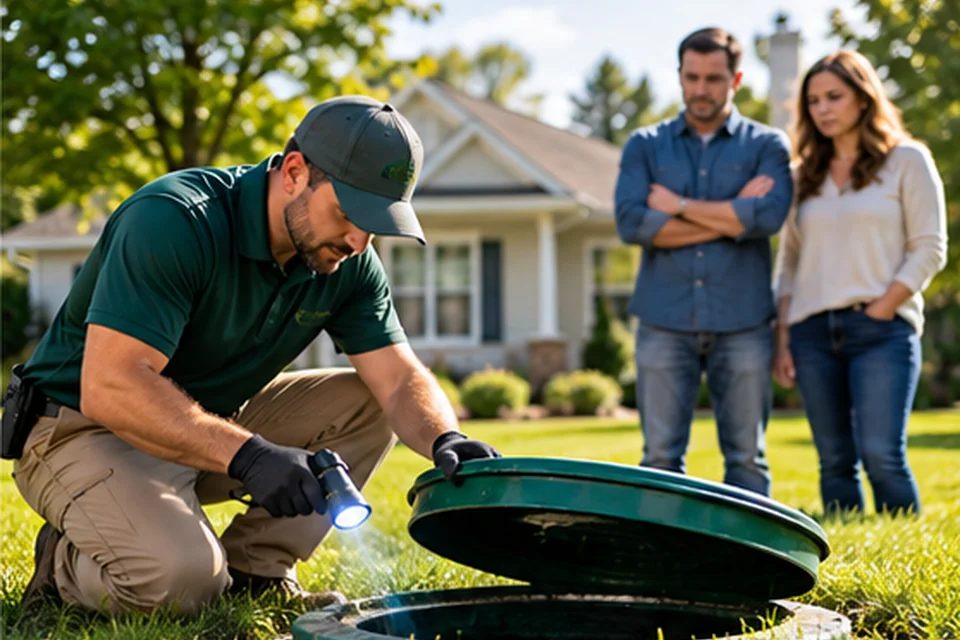
A septic inspection when buying a house is a professional check of the home’s septic tank, pipes, distribution box and drain field before you close, and the U.S. EPA advises every homebuyer to have one done by a septic system service provider before purchase. Ask your home inspector whether the septic system is included; if it is not, schedule a septic inspection as a separate step during your inspection contingency.
Buying a house with a septic system means taking on a treatment system that can cost thousands to tens of thousands of dollars to repair or replace, according to the EPA’s homebuyer guide. The inspection is how you find out which situation you are buying into while you can still negotiate.
Why do you need a septic inspection when buying a house?
A septic inspection tells a buyer whether the system works, how it has been maintained and what it is likely to cost in the near future. The EPA’s homebuyer guide puts the average septic system lifespan at 15 to 40 years, so the age of the system matters as much as whether the toilets flush on the day of the showing.
The cost difference between a healthy system and a failing one is large:
| Item | 2026 figure | Source |
|---|---|---|
| Detailed septic inspection (real estate) | $400 to $700 | Angi |
| Septic tank pumping | $290 to $560 (average $420) | This Old House |
| Septic repair, national average | $1,828 | Angi |
| Drain field replacement | about $7,000 | Angi |
| New septic system, national average | $8,016 | Angi |
A few hundred dollars for an inspection is small next to a surprise drain field replacement. For more on what drives the price, see septic inspection cost.
What does a pre-purchase septic inspection cover?
A pre-purchase septic inspection covers the tank, the pipes in and out of it, the distribution box and the drain field, plus the system’s records. The EPA’s homebuyer guide recommends asking the inspector to review:
- Pumping and service history, and the system’s age
- Sludge and scum levels in the tank
- Leaks, such as an unusually low water level in the tank
- Signs of backups, such as staining in the tank above the outlet pipe
- The tank and inlet and outlet pipes, for cracks or damage
- Standing water over the drain field, which can signal failure
- The distribution box, to confirm it sends equal flow to each drain line
- Records showing compliance with local rules on location and function
Visual inspection vs full inspection
A visual septic inspection and a full septic inspection are different services, and a home purchase usually calls for the full one. Angi describes a routine annual check as a visual review costing $200 to $250, while a detailed inspection used in real estate sales costs $400 to $700 in 2026. The detailed inspection is where the inspector locates and opens the tank, measures the sludge and scum, looks for cracks and leaks, and evaluates the drain field.
A camera inspection adds a view inside the tank or lines and costs $250 to $900, according to Angi. Camera work is worth adding when the full inspection points to a cracked line, a root problem or a past backup.
Does the tank need to be pumped?
A septic inspection may involve pumping the tank, because pumping lets the inspector see the tank walls, baffles and outlet more clearly. Angi notes the inspector can test sludge and scum levels to decide whether pumping is needed, and prices standalone pumping at $290 to $560. Ask the inspector before the visit whether pumping is included, and if the tank lids are buried, expect an excavation charge; Angi puts uncovering the tank at $50 to $250.
Drain field evaluation
The drain field is the most expensive part of the system to replace, so the drain field check deserves attention. The inspector looks for standing water, sewage at the surface and soggy ground over the lines. The EPA lists standing water over the drainfield as a possible sign of failure. Learn more about how this part works in our drain field guide.
Who orders and pays for the septic inspection?
The buyer usually orders and pays for a pre-purchase septic inspection, because it is part of the buyer’s due diligence. The purchase contract can change that, and in places that require an inspection at sale, the seller often carries the obligation.
- Massachusetts: MassDEP says the property owner is responsible for arranging the Title 5 inspection, though buyer and seller can shift that in writing as long as the inspection happens within the required timeframes.
- King County, Washington: Public Health - Seattle & King County says sellers must schedule the inspection with a certified on-site system maintainer before title transfers.
Even when the seller provides a report, a buyer can hire a separate inspector for an independent opinion.
Is a septic inspection required when you sell or buy a house?
A septic inspection at the time of sale is required only in some states and localities. Two examples from official pages:
Massachusetts (Title 5)
Massachusetts requires a Title 5 septic inspection in connection with most property sales. According to MassDEP:
- The inspection is generally required within 2 years before a sale, or within 6 months after if weather prevents it.
- An inspection is valid for 2 years, or 3 years if the system has been pumped annually and the records are available.
- Only MassDEP-approved inspectors can perform a valid Title 5 inspection, and the buyer must receive a copy of the report from the seller.
- A failed system must be upgraded within 2 years, unless the Board of Health or MassDEP sets another schedule.
- Some transfers are exempt, including transfers between spouses, between parents and children, and refinancing.
King County, Washington
King County requires properties with septic systems to be inspected by a certified on-site system maintainer before title transfers. The maintainer files the report with Public Health - Seattle & King County, and the seller must record a notice of operation and maintenance requirements and give the buyer a copy before closing.
Everywhere else
Outside of places with a written rule, a septic inspection is usually a buyer’s choice. The EPA notes that your local government, state or mortgage lender may require one. Requirements vary by state and county, so check with the local health department and review the state rules on our septic licensing pages.
What are the red flags on a septic inspection?
The red flags on a septic inspection are signs that the system is failing or close to it. Watch for these during showings and in the report:
- Backups or gurgling drains inside the house (EPA)
- Strong odors near the tank or drain field (EPA)
- Unusually bright green, spongy grass over the drain field (EPA)
- Standing water over the drain field (EPA)
- A low liquid level in the tank, which can mean a leak (EPA)
- Staining above the outlet pipe, a sign of past backups (EPA)
- No pumping or service records, or no “as built” drawing from the health department
- A system near the end of its expected life, given the EPA’s 15-to-40-year range
Several of these overlap with the warning signs covered in signs of septic system failure.
Records to ask the seller for
Ask the seller for three documents before or during the inspection, as the EPA recommends: the pumping and maintenance history, the “as built” drawing of the system, and paperwork showing the system meets local rules. If the seller has none of these, the local health department may have the as-built drawing on file.
How do you negotiate septic repairs before closing?
You negotiate septic repairs the same way as other inspection findings: with a written report, a contractor’s quote and a specific request. Common options include:
- Seller repairs before closing. Ask for the work to be done by a licensed contractor, with a permit where required, and get the final paperwork.
- Price reduction or closing credit. Base the number on a written repair or replacement quote, not a guess.
- Escrow holdback. Part of the sale proceeds is held until the repair is finished, which helps when weather or permitting delays the work.
- Walk away. If the inspection contingency allows it and the system needs full replacement, leaving may be the right call.
A credit only helps if it covers the real cost. Angi puts the average septic repair at $1,828 and a new system at $8,016 in 2026, with aerobic and mound systems running $10,000 to $20,000. Get a quote for the actual system the site needs. For the seller’s side of this situation, see can you sell a house with a failing septic system.
What should a new owner do after closing?
A new owner should start a maintenance schedule right away, because routine care is far cheaper than repair. The EPA recommends having a household septic system inspected at least every three years and pumped every three to five years, and systems with mechanical parts, such as aerobic units, inspected about once a year. The EPA’s homebuyer guide puts routine maintenance at $250 to $500. Keep every service record; you will want them when you sell. Our septic system maintenance guide covers the routine.
How do you find a qualified septic inspector?
Hire a septic inspector who holds the license or certification your state or county requires, and confirm it before the visit. In Massachusetts, only MassDEP-approved inspectors can perform Title 5 inspections, and other states have their own rules. You can find a licensed septic company near the property in our directory, which is built from published state license and certification records, and then check the contractor’s license with the issuing agency before you sign anything.
Common questions
Should I get a septic inspection before buying a house?
Yes. The U.S. EPA advises homebuyers to have a septic system inspected by a septic system service provider before purchasing a home. A septic inspection that opens the tank and checks the drain field is the most direct way to learn the system's condition before closing.
Who pays for a septic inspection when buying a house?
The buyer usually orders and pays for a pre-purchase septic inspection as part of due diligence, but the purchase contract can assign it to either party. In Massachusetts the property owner is responsible for arranging the Title 5 inspection, and in King County, Washington the seller schedules the required inspection.
How much does a septic inspection cost when buying a house?
Angi puts a detailed septic inspection of the kind used in real estate sales at $400 to $700 in 2026, with larger homes reaching about $1,300. Pumping the tank, uncovering buried lids and camera work can add to the bill.
Is a septic inspection required to sell a house?
A septic inspection at sale is required only in some states and localities. Massachusetts requires a Title 5 inspection within 2 years before most property sales, and King County, Washington requires an inspection before title transfer. Elsewhere, rules vary by state and county, and a lender may also ask for one.
What fails a septic inspection?
A septic inspection typically flags sewage backing up into the house, standing water or sewage over the drain field, a cracked tank or broken pipes, signs of past backups inside the tank, and a tank that leaks. The EPA lists standing water over the drain field as a possible sign of failure.
Sources
- A Homebuyer's Guide to Septic Systems (brochure), U.S. Environmental Protection Agency. Accessed October 20, 2026. Inspect before purchase; inspection checklist; records to request; lifespan 15-40 years; routine maintenance $250-$500
- How to Care for Your Septic System, U.S. Environmental Protection Agency. Accessed October 20, 2026. Inspect at least every three years; pump every three to five years; alternative systems inspected about once a year
- Buying or Selling Property with a Septic System, Commonwealth of Massachusetts (MassDEP). Accessed October 20, 2026. Title 5 inspection within 2 years before sale; valid 2 years or 3 with annual pumping; failed systems upgraded within 2 years
- Sales and transfers: on-site sewage systems, Public Health - Seattle & King County. Accessed October 20, 2026. Inspection by a certified maintainer before transfer of title; seller schedules
- How Much Does a Septic Inspection Cost? [2026 Data], Angi. Accessed October 20, 2026. National average $550; detailed real estate inspection $400-$700; camera $250-$900; excavation $50-$250
- What Is the Cost to Pump a Septic Tank?, This Old House. Accessed October 20, 2026. Pumping average $420, range $290-$560 (2026 pricing)
- How Much Does It Cost to Repair a Septic Tank? [2026 Data], Angi. Accessed October 20, 2026. Repair national average $1,828; repair costs by component
- How Much Does a Septic System Cost? [2026 Data], Angi. Accessed October 20, 2026. Installation average $8,016; drain field replacement $7,000