The short answer
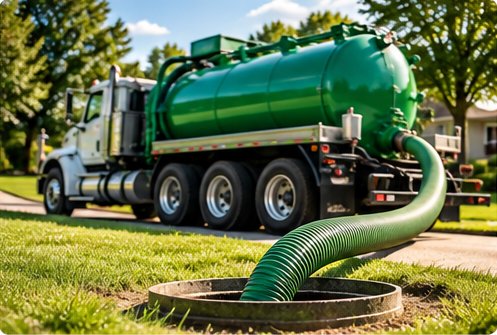
Septic tank pumping is the removal of sludge, scum and liquid from a septic tank by a septic service company with a vacuum truck. The U.S. EPA says household septic tanks are typically pumped every three to five years, depending on household size, wastewater volume, solids and tank size. The National Association of Wastewater Technicians says a proper pump-out goes through the main access port, removes all organic solids and includes a check of the baffles.
Septic tank pumping is the removal of the sludge, scum and liquid that build up inside a septic tank, done by a septic service company with a vacuum truck. The U.S. Environmental Protection Agency (EPA) says household septic tanks are typically pumped every three to five years, though the right interval depends on household size, how much wastewater the home produces, the volume of solids, and the size of the tank. Regular pumping keeps solids inside the tank instead of letting them wash out and clog the drain field.
What does septic tank pumping involve?
Septic tank pumping involves opening the tank’s access lid, lowering the liquid level, stirring up the settled solids, and vacuuming the contents into a sealed truck tank. The National Association of Wastewater Technicians (NAWT) publishes a pumping code of practice that sets out the professional standard:
- Use the right opening. Tanks are pumped only through the manhole or access port of each tank or compartment, never through the small observation port.
- Lower the liquid first. The crew agitates solids only after lowering the liquid to 12 inches below the outlet, by alternating pumping and backflushing, injecting air, or stirring mechanically.
- Remove the solids. NAWT considers a tank clean when all organic solids are removed and the average remaining liquid depth is between 1 and 3 inches.
- Look inside. Every pump-out includes a visual inspection of the tank interior, including whether the baffles are present and in good condition.
- Protect the drain field. Nothing is discharged into or through the outlet pipe.
What a septic pumper checks during the visit
A septic pumper should report anything unusual found during the service. NAWT lists high or low liquid levels, run-back from the absorption area, broken components, missing observation ports, lush vegetation, and sewage overflows as conditions to tell the customer about. Oklahoma State University Extension explains that a liquid level above the bottom of the outlet pipe suggests a blockage, while a lower level suggests a possible leak.
The EPA adds that a septic service provider should inspect for leaks, examine the scum and sludge layers, record completed repairs and the tank’s condition in a service report, and recommend any other repairs, which should be done soon.
How often should a septic tank be pumped?
A septic tank should be pumped when the solids reach a set level, which for most households works out to every three to five years, according to the EPA. Four things drive the interval: the number of people in the house, the total wastewater generated, the volume of solids in that wastewater, and the tank size. Heavy garbage disposal use adds food solids, which the EPA says can require more frequent pumping. The full breakdown is in how often to pump a septic tank.
A measured trigger is more reliable than a calendar date. These are the thresholds published by the EPA and Oklahoma State University Extension:
| Measurement | Pump the septic tank when… | Source |
|---|---|---|
| Scum layer | The bottom of the scum is within 6 inches of the bottom of the outlet | EPA |
| Sludge layer | The top of the sludge is within 12 inches of the outlet | EPA |
| Combined layers | Sludge and scum make up more than 25% of the liquid depth | EPA |
| Sludge volume | Sludge reaches at least 1/3 of the tank’s liquid capacity | Oklahoma State University Extension |
The EPA recommends writing down the sludge and scum levels found at each service so the household can see how fast solids accumulate and time the next pumping.
Septic tank cleaning vs. pumping: is there a difference?
Septic tank cleaning and septic tank pumping are often used interchangeably, but some in the trade draw a line between them. Pumper magazine (2024) describes pumping as extracting the liquid waste and floating debris, which manages the tank’s volume but does not remove the solid sludge at the bottom, and describes cleaning as removing all liquid and solid waste, including compacted sludge.
The NAWT code of practice does not treat a liquid-only pump-out as complete. Under NAWT’s standard, a tank is clean only when all organic solids are removed. Because the words mean different things to different companies, the practical step is to ask before the truck arrives whether the crew will agitate and remove the bottom sludge, and how much liquid will be left in the tank.
What should you ask a septic pumping company?
A septic pumping company should be able to answer these questions clearly before the job:
- Are you licensed? The EPA’s SepticSmart materials advise having a licensed septic tank contractor inspect and pump the tank. Licensing rules vary by state; see septic licensing by state.
- Will you pump through the main access lid of every compartment? NAWT says pumping goes through the manhole or access port of each tank or compartment.
- Will you remove the bottom sludge? This is the cleaning vs. pumping question above.
- Will you check the baffles and record sludge and scum levels? Both are part of the NAWT and EPA descriptions of the service.
- Will I get a written report? NAWT says unsatisfactory conditions should be noted on the receipt, and the customer should be told how often future maintenance should occur.
- Do you file any report my town requires? Where a municipality requires a pumping report, NAWT says the customer must receive a copy.
How do you prepare for a septic pumping appointment?
Preparing for septic tank pumping mostly means knowing where the tank is and making the lid reachable. Oklahoma State University Extension notes that septic tanks are usually around 10 to 25 feet from the house and cannot be closer than 5 feet, and suggests checking the system’s approved final inspection report to find the components. A local health department permit file can also show the system’s location, according to University of Illinois Extension guidance for home buyers.
Buried lids add digging time to every visit. A septic tank riser brings the access lid up to the surface.
Septic tanks are hazardous to open. Cornell Cooperative Extension warns that toxic or explosive gases may be present at an open tank, and NAWT says tanks generally should not be entered at all; any entry requires confined-space procedures consistent with OSHA requirements. Keep children and pets away while the lid is off.
How much does septic tank pumping cost?
Septic tank pumping cost depends mainly on tank size and location. Penn State Extension lists pumping at $275 to $500, depending on tank size, in south-central Pennsylvania in 2026. National averages from cost publishers, and what drives the price up or down, are covered in septic tank pumping cost.
Do septic additives replace pumping?
Septic tank additives do not replace pumping. The National Small Flows Clearinghouse at West Virginia University says additives are generally unnecessary and that solids washed out of an unpumped septic tank can cause early drain field failure. NAWT takes no position on chemical or bacterial additives. More detail is in septic tank treatments and additives.
Is septic tank pumping part of an inspection?
Septic tank pumping is often part of a full septic inspection, but the two are different services. The EPA says a typical household system should be inspected by a septic professional at least every three years, and systems with float switches, pumps or other mechanical parts generally once a year. Penn State Extension notes that real estate inspections done under the PSMA/NOF procedures used in Pennsylvania require all treatment and dose tanks to be pumped during the inspection.
Find a licensed septic pumping company
The Septic Guide lists 28,546 septic companies and licensed septic professionals in 45 states, with 27,065 matched to license or certification lists published by 26 state agencies. Search septic companies near you, then confirm the company’s credential with the issuing agency using how to check a septic contractor license before booking.
Common questions
How often should a septic tank be pumped?
The U.S. EPA says household septic tanks are typically pumped every three to five years. The right interval for a given septic tank depends on household size, total wastewater, the volume of solids and the tank's size, so a septic professional should measure the sludge and scum layers and recommend a schedule.
Is septic tank cleaning the same as septic tank pumping?
Septic tank cleaning and septic tank pumping are often used as the same term, but Pumper magazine describes pumping as removing liquid and floating material and cleaning as removing everything, including compacted bottom sludge. The National Association of Wastewater Technicians' standard for a pump-out requires removing all organic solids, so ask the company whether the bottom sludge will be removed.
Should a septic tank be pumped through the inspection port?
A septic tank should not be pumped through the inspection (observation) port. The National Association of Wastewater Technicians' pumping code says tanks shall only be pumped through the manhole or access port of each tank or compartment, which lets the crew reach and remove the settled solids.
Do septic additives reduce how often a tank needs pumping?
Septic additives are not a substitute for septic tank pumping. The National Small Flows Clearinghouse at West Virginia University says additives are generally unnecessary, and the National Association of Wastewater Technicians takes no position on chemical or bacterial additives.
Sources
- How to Care for Your Septic System, U.S. Environmental Protection Agency. Accessed October 20, 2026. Pumping typically every 3-5 years; scum within 6 inches or sludge within 12 inches of the outlet, or more than 25% of liquid depth, means pump; what service providers check; garbage disposals add solids
- Pumping Code of Practice, National Association of Wastewater Technicians (hosted by Maryland Department of the Environment). Accessed October 20, 2026. Pump only through the manhole/access port; lower liquid to 12 inches below outlet before agitating; tank clean at 1-3 inches average remaining liquid; baffle check; no position on additives
- The Critical Differences Between Septic Tank Pumping and Cleaning, Pumper. Accessed October 20, 2026. Trade definition of pumping vs cleaning (July 10, 2024)
- Inspection of Septic Systems, Oklahoma State University Extension. Accessed October 20, 2026. Pump when sludge reaches 1/3 of liquid capacity; tanks usually 10-25 feet from the house and not closer than 5 feet; liquid level clues
- On-Lot Septic System Inspections During Real Estate Transactions, Penn State Extension. Accessed October 20, 2026. Pumping $275-$500 depending on tank size (south-central Pennsylvania, 2026)
- Do Your Part, Be SepticSmart (mail insert, EPA-832-R-14-004), U.S. Environmental Protection Agency. Accessed October 20, 2026. Have a licensed septic tank contractor inspect and pump the tank
- Technical Overview: Soil Absorption Systems, National Small Flows Clearinghouse, West Virginia University. Accessed October 20, 2026. Solids washed from an unpumped tank cause early drainfield failure; additives generally unnecessary
- Your Septic System: Septic System Failure, Cornell Cooperative Extension. Accessed October 20, 2026. Toxic or explosive gases may be present at an open tank