The short answer
A septic inspection is a professional evaluation of a septic tank, its baffles and sludge levels, the distribution lines and the drain field. The U.S. EPA says a typical household system should be inspected at least every three years, and yearly if it has pumps, float switches or other mechanical parts; its SepticSmart infographic puts typical servicing at every one to three years. A full inspection for a home sale usually includes pumping the tank, and Penn State Extension says inspections under Pennsylvania's PSMA/NOF procedures require it.
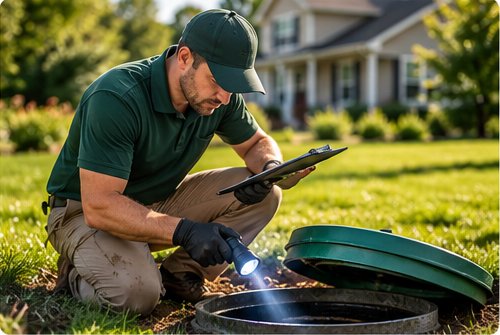
A septic inspection is a professional evaluation of a septic system’s tank, baffles, sludge and scum levels, distribution lines and drain field, ending in a written report on the system’s condition. The U.S. Environmental Protection Agency (EPA) says a typical household septic system should be inspected at least every three years, and once a year if it has electrical float switches, pumps or other mechanical parts. Inspections are also standard when a home with a septic system is bought or sold.
How often should a septic system be inspected?
A septic system should be inspected at least every three years, according to the EPA’s homeowner care guidance, and the EPA’s SepticSmart infographic says a typical system should be serviced every one to three years. Systems with mechanical components, including pumps, float switches and aerobic septic systems, need closer attention: the EPA says those should generally be inspected once a year.
Some places set their own schedule. Penn State Extension notes that Pennsylvania municipalities with local rules often require routine inspections every 3 to 5 years, done by Sewage Enforcement Officers or certified septic service providers. In Texas, the TCEQ requires aerobic-system maintenance providers to submit a report to the permitting authority and the owner at least once every four months.
What are the types of septic inspections?
Septic inspections range from a limited look at the surface to a full evaluation that opens and pumps the tank and tests the drain field. The scope matters more than the label, so ask the inspector exactly what will be opened, measured and tested.
Limited or visual inspection
A limited (visual) septic inspection looks for surface signs of trouble without fully opening and pumping the tank. Oklahoma State University Extension describes the baseline observations inspectors record: soil wetness, darker green patches of grass, wetness near the tank lids and cleanouts, and photos for later comparison. A visual check can catch an obvious failure, but it cannot measure sludge, confirm baffle condition or show whether the drain field handles a normal day’s flow.
Full (functional) inspection
A full septic inspection opens the tank, measures the solids, checks the components, and stresses the system with water. Penn State Extension says inspections conducted under the PSMA/NOF procedures used in Pennsylvania real estate transactions evaluate the septic tank, distribution pipes and soil treatment area, plus dosing pumps and alarms, and require all treatment and dose tanks to be pumped during the inspection.
Regulatory or routine inspection
A regulatory septic inspection is one required by a town, county or state on a set schedule. Penn State Extension notes that a Sewage Enforcement Officer generally treats a system as failing only when it malfunctions, such as sewage surfacing or backing up into the home, which is a narrower standard than a buyer’s inspection.
What does a septic inspector check?
A septic inspector checks every component from the house plumbing to the drain field. Oklahoma State University Extension lays out the order:
- Plumbing and cleanout. If water runs through the cleanout when no fixtures are in use, the toilets and sinks need inspection.
- Locate the components. Find the tank, trenches or spray heads, and anything built or paved over the dispersal field. The approved final inspection report helps.
- Baseline observations. Record wet spots and lush grass, and take photos.
- The septic tank. Check riser integrity, baffles, scum, liquid level and sludge.
- Water stress test. Run water and watch how the system responds.
- Aerobic components, if present. Check the control panel, aerator, aeration chamber, pump tank, disinfectant and sprinkler or drip dispersal.
Sludge and liquid level
Septic inspectors measure sludge with a sampling device rather than by eye. Oklahoma State University Extension says the tank should be pumped if sludge reaches at least 1/3 of its liquid capacity, and that a liquid level above the bottom of the outlet pipe suggests a blockage while a lower level suggests a leak. The EPA lists checking for leaks and examining the scum and sludge layers as core tasks for any service provider.
Hydraulic load (water stress) test
A hydraulic load test checks whether the drain field can absorb a normal daily flow. In Oklahoma State University Extension’s method, running the bathtub for 30 minutes sends approximately 150 gallons through the system; if the liquid level rises above the outlet pipe, the outlet or dispersal lines are blocked. Penn State Extension says the test is typically needed when normal flow cannot be confirmed: the home was vacant for more than one week, the tank was pumped less than 30 days before the inspection, or the home is used seasonally. The NAWT sample report also recommends a load test when the buyer’s expected occupancy exceeds the seller’s.
When do you need a septic inspection?
A septic inspection is needed on a routine schedule and at specific trigger points:
- Buying or selling a home. University of Illinois Extension says many buyers and lending agencies now ask for a professional inspection report before closing, and warns that a seller’s disclosure alone “may provide a false sense of security.”
- Routine maintenance. Every three years for a typical system and yearly for mechanical systems, per the EPA.
- Warning signs. Slow drains, odors, soggy ground or backups call for an inspection right away; see signs of septic system failure.
- Local requirements. Some municipalities require inspections on a set cycle.
Septic inspections for home buyers
A home buyer’s septic inspection should start before the offer is final. Penn State Extension recommends a contingency clause that makes the purchase dependent on the inspection. University of Illinois Extension says the buyer’s first step is to contact the local health department, whose permit file can show the system’s location, age, tank and lateral field size, and any complaints. Illinois Extension also lists what a good report includes: the inspector’s credentials, a sketch of the system, confirmation that the tank was uncovered, current photos, and recent occupancy, since a system that has not been used is hard to evaluate.
How are septic inspection results reported?
A septic inspection report describes the system type, the condition of each component, problems found and recommended repairs. Oklahoma State University Extension says the report should include the inspection date and time. The National Association of Wastewater Technicians (NAWT) sample report rates a system as Acceptable, Acceptable with Concerns, More Investigation Needed, or Unacceptable, and calls for a follow-up inspection by a NAWT inspector after corrective work.
Who performs septic inspections?
Septic inspections are performed by septic contractors, certified inspectors, or local health officials, depending on the state and the purpose. University of Illinois Extension names a Licensed Private Sewage Installation Contractor or a Licensed Environmental Health Practitioner as the credentials to look for in Illinois. Penn State Extension directs Pennsylvania buyers to trained and certified inspectors listed by PSMA.
Nationally, NAWT runs an inspector training program. Pumper magazine reports that candidates complete the inspection course and pass an exam to earn a NAWT certificate, which is valid for two years. Rules on who may inspect vary by state; see septic licensing by state.
How much does a septic inspection cost?
Septic inspection cost depends on scope. Penn State Extension’s 2026 figures for south-central Pennsylvania are $350 to $700 for a base inspection, $625 to $1,200 with pumping, and $1,125 to $2,200 for a full inspection with pumping and a hydraulic load test. National figures and price drivers are in septic inspection cost. Because full inspections usually include a pump-out, see septic tank pumping for what that part of the visit should include.
Find a licensed septic inspector
The Septic Guide lists 28,546 septic companies and licensed septic professionals in 45 states, with 27,065 matched to license or certification lists published by 26 state agencies. Search septic companies near you, ask what the inspection includes, and verify the inspector’s credential with how to check a septic contractor license.
Common questions
How often should a septic system be inspected?
The U.S. EPA says a typical household septic system should be inspected by a septic professional at least every three years. Septic systems with electrical float switches, pumps or other mechanical parts should generally be inspected once a year, and the EPA's SepticSmart infographic puts typical servicing at every one to three years.
Is a septic inspection required to sell a house?
Whether a septic inspection is required to sell a house depends on state and local rules and on the buyer's lender. University of Illinois Extension notes that many buyers and lending agencies now ask for a professional inspection report before closing, and Penn State Extension recommends that buyers make the purchase contingent on the inspection.
Does a septic inspection include pumping?
A full septic inspection often includes pumping so the inspector can see the tank walls, baffles and inlet and outlet. Penn State Extension says inspections done under the PSMA/NOF procedures require all septic, aerobic and dose tanks to be pumped during the inspection.
What is a hydraulic load test in a septic inspection?
A hydraulic load test sends a measured volume of water into a septic system to see whether the drain field can absorb a normal day's flow. Penn State Extension says inspectors may require one when a home has been vacant for more than a week, the tank was pumped less than 30 days earlier, or the home is used seasonally.
Sources
- How to Care for Your Septic System, U.S. Environmental Protection Agency. Accessed October 20, 2026. Inspect at least every three years; annually for systems with mechanical parts; what service providers check
- Do Your Part, Get SepticSmart (infographic), U.S. Environmental Protection Agency. Accessed October 20, 2026. Typical system serviced every one to three years
- On-Lot Septic System Inspections During Real Estate Transactions, Penn State Extension. Accessed October 20, 2026. PSMA/NOF inspections require pumping; hydraulic load test triggers; 2026 south-central PA prices; regulatory inspections often every 3-5 years
- Inspection of Septic Systems, Oklahoma State University Extension. Accessed October 20, 2026. Step-by-step inspection; 30-minute bathtub test sends about 150 gallons; 1/3 sludge rule; aerobic component checks
- Buying and Selling Homes, University of Illinois Extension. Accessed October 20, 2026. Buyers should start with the local health department permit file; what a good inspection report includes
- NAWT Sample Inspection Report (2025), National Association of Wastewater Technicians, via University of Arizona. Accessed October 20, 2026. Four ratings: Acceptable, Acceptable with Concerns, More Investigation Needed, Unacceptable
- NAWT Schedules Inspector Training, Certification Courses, Pumper. Accessed October 20, 2026. NAWT inspector course plus exam; certificate valid two years
- OSSF Maintenance, Texas Commission on Environmental Quality. Accessed October 20, 2026. Aerobic maintenance providers report at least once every four months