The short answer
Septic pump repair fixes the effluent, lift or grinder pump that moves wastewater to a drain field or sewer when gravity cannot, along with its float switches, controls and high-water alarm. Angi puts most septic pump repairs at $250 to $400 and full pump replacement at $1,000 or more in 2026, while Angi prices grinder pump replacement at $2,000 to $4,000. Washington State's Department of Health advises checking the breaker, cord and floats before calling for service, and having repairs done by a licensed professional.
Septic pump repair fixes the pump, float switches, controls or alarm that move wastewater from a pump tank to a drain field, mound or sewer line when gravity alone cannot do it. A failed septic pump stops the whole system: the pump tank fills, the high-water alarm sounds and, if the problem is not fixed, sewage backs up into the house.
Most septic pump problems are repairable, and many start with something simple like a tripped breaker or a stuck float. This guide explains the types of septic pumps, how to read the warning signs, what to check before calling for service, and what repair or replacement costs in 2026.
What does a septic pump do?
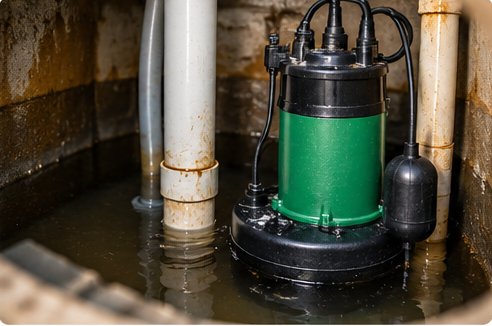
A septic pump lifts or pressurizes wastewater so it can reach a part of the system that sits higher or farther away than gravity allows. Septic pumps sit in a separate pump tank or chamber after the septic tank.
The Virginia Department of Health explains why the pump comes after the septic tank: the septic tank liquefies the wastewater and holds back most solids, because most effluent pumps cannot pass large solids and solids can damage the soil in the drain field. VDH notes that residential pumps are rarely smaller than 1/4 horsepower or larger than 1/2 horsepower.
Types of septic pumps
| Pump type | What it moves | Where it is used |
|---|---|---|
| Effluent pump | Settled liquid from the septic tank | Pressure distribution, mound, drip and sand filter systems; drain fields uphill from the tank |
| Lift station / sewage ejector pump | Raw sewage | Homes where plumbing sits below the tank or sewer line |
| Grinder pump | Raw sewage, ground into a slurry | Pressure sewer connections and long or uphill runs |
Aerobic treatment units also use a pump to send treated effluent to spray heads or drip lines. See aerobic septic systems for how those work.
How does a septic pump system work?
A septic pump system works on float switches or a timer that turn the pump on and off as the pump tank fills. Washington State’s Department of Health says pump action can be controlled either by control floats or by timer controls.
The Virginia Department of Health describes a typical three-float setup:
- Lowest float (“pump enable/off”): Must be up for the pump to run; the pump runs until this float drops.
- Middle float (“pump on”): Starts the pump when it tips up.
- Top float (“high-water alarm”): Sounds an audio-visual alarm if the pump fails to start.
Washington’s DOH adds that the alarm should be on an electrical circuit separate from the pump, so a tripped pump breaker does not also silence the warning.
What are the signs of a failing septic pump?
The signs of a failing septic pump are a high-water alarm, a pump that runs nonstop or not at all, and backups or odors. Watch for:
- High-water alarm sounding. VDH says this alarm signals that the pump did not start when the “on” float rose.
- Alarm that keeps coming back after you reset it.
- Tripped breaker or blown fuse on the pump circuit.
- Pump running constantly, which can point to a stuck float or a leak letting water into the tank.
- Slow drains or sewage backing up into the house once the tank’s reserve is used. Washington’s DOH says that if all of the reserve storage in the chamber is used, the plumbing in your home can back up.
- Wet spots or odors near the pump tank or drain field.
For more on what the alarm means, see our septic alarm guide. If sewage is already in the house, go to septic system backing up.
What should you check before calling for septic pump repair?
Before calling for septic pump repair, check the simple things, without opening the pump chamber. Washington State’s Department of Health suggests:
- Cut back on water use. Skip baths, showers and laundry to buy time.
- Silence the alarm with the reset or silence button on the alarm panel.
- Check the breaker and fuse for the pump circuit.
- Check that the pump and float cords are plugged in, if your controls use plug-in connections.
- Look for tangled floats or debris on the floats, if you can see them from the riser without reaching in.
If the alarm clears and the pump runs, you may have found the problem; if not, call a professional. Washington’s DOH says repairs must be done by a licensed professional.
Safety around septic pumps
Septic pumps combine electricity, water and toxic gases, so treat them carefully. Washington’s DOH warns: “Never enter the pump chamber. Gases inside pump chambers are poisonous, and the lack of oxygen can be fatal.” The DOH also says to turn off the power at the circuit breaker and unplug all power cords before handling the pump or floats. After a flood, the EPA advises examining all electrical connections for damage before restoring power and avoiding flooded electrical or mechanical devices until they are dry and clean.
What to do after a power outage
After a power outage, a float-controlled pump tank may be fuller than normal. Washington’s DOH says that if a float-controlled pump has been off for more than 6 hours, you should reduce water use and turn the pump off at the panel; once power returns, run the pump manually for no more than 5 minutes at a time, repeating every 6 hours until it shuts off on its own. Timer-controlled systems correct this automatically, according to the DOH.
Should you repair or replace a septic pump?
Repair a septic pump when the fault is in a float, control panel, wiring, check valve or a clog and the motor is sound; replace it when the motor has failed, the housing is corroded or the pump keeps failing. A technician can test the motor’s electrical draw and the floats to tell which it is.
| Situation | Usual answer |
|---|---|
| Stuck or failed float switch | Repair (replace the float) |
| Tripped breaker, bad wiring or control panel fault | Repair |
| Clogged intake or screen | Repair (clean) |
| Burned-out motor | Replace the pump |
| Corroded or cracked pump housing | Replace the pump |
| Repeated failures | Replace, and ask why it keeps failing |
When replacing a pump, match it to the system’s design. VDH notes that pump size depends on how far and how high the effluent must go and why it is being pumped, so a like-for-like replacement or the system designer’s specification is the safe choice.
How much does septic pump repair cost in 2026?
Septic pump repair costs $250 to $400 for most repairs and $1,000 or more for a full pump replacement, according to Angi’s 2026 data. Published figures by job:
| Job | Cost | Source |
|---|---|---|
| Septic pump repair (most jobs) | $250 to $400 | Angi, 2026 |
| Septic pump, overall range | $250 to $1,000 | Angi, 2026 |
| Full septic pump replacement | $1,000 or more | Angi, 2026 |
| Septic pump replacement, including labor | $800 to $1,400 | Bob Vila, 2023 |
| Sewage ejector pump replacement | $850 to $3,500 (average $2,300) | Angi, 2026 |
| Grinder pump replacement, installed | $2,000 to $4,000 | Angi, 2026 |
| Battery-powered backup pump | about $600 | Angi, 2026 |
| Septic repair labor | $125 to $250 per hour | Angi, 2026 |
Costs rise when the pump tank has to be pumped out first, when wiring or the control panel needs work, or when the job is an emergency call. See septic repair cost for other component prices.
How do you keep a septic pump working?
You keep a septic pump working with yearly inspection, a clean septic tank and an effluent filter or pump screen that keeps solids out. Washington’s DOH recommends inspecting the pump and floats yearly, following the manufacturer’s maintenance guidance, testing the alarm’s push-to-test button regularly and installing an effluent filter or pump screen if the system lacks one. The EPA says systems with mechanical parts generally need inspection once a year. Our septic repair guide covers other common fixes.
Find a licensed septic pump repair company
Septic pump repair involves electrical work and a confined space with toxic gases, so hire a licensed septic professional. Find a licensed septic company near you that services pump systems, and check the contractor’s license with the issuing agency before work begins.
Common questions
How much does septic pump repair cost?
Septic pump repair costs $250 to $400 for most repairs, according to Angi's 2026 data, and full septic pump replacement costs $1,000 or more. Bob Vila reported pump replacement at $800 to $1,400 including labor, and Angi puts grinder pump replacement at $2,000 to $4,000.
What are the signs a septic pump is failing?
The signs a septic pump is failing include a high-water alarm that sounds or will not clear, a pump that runs constantly or never runs, a tripped breaker, sewage odors near the pump tank and slow drains or backups in the house. A high-water alarm is the most direct sign, because it is triggered when the pump fails to start.
What should I do when my septic pump alarm goes off?
When a septic pump alarm goes off, cut back on water use, silence the alarm with the panel's reset or silence button, and check for a tripped breaker, blown fuse, unplugged cord or tangled float. Washington State's Department of Health advises calling a licensed professional for repairs and never entering the pump chamber.
Should I repair or replace a septic pump?
Repair a septic pump when the problem is a float switch, control, wiring or a clog and the pump motor is sound. Replace the septic pump when the motor has burned out, the pump is corroded or it keeps failing. Angi puts most repairs at $250 to $400 and full replacement at $1,000 or more in 2026.
How long can I go with a broken septic pump?
A home can go only a short time with a broken septic pump, because the pump tank fills with each use of water. Virginia designs systems with one-quarter day of storage above the alarm, which strict water conservation can stretch to a day or more, according to the Virginia Department of Health.
Sources
- Understanding and Caring For Your Pressure Distribution System (DOH 337-087), Washington State Department of Health. Accessed October 20, 2026. Floats or timers control the pump; alarm on separate circuit; what to check when alarm sounds; inspect pump and floats yearly; never enter pump chamber
- Pump Systems, Virginia Department of Health. Accessed October 20, 2026. Three floats (off, on, high-water alarm); residential pumps 1/4 to 1/2 hp; one-quarter day storage above alarm in Virginia
- How Much Does It Cost to Repair a Septic Tank? [2026 Data], Angi. Accessed October 20, 2026. Pump $250-$1,000; repairs $250-$400; full replacement $1,000+; hourly $125-$250
- How Much Does a Sewer Ejector Pump Cost? [2026 Data], Angi. Accessed October 20, 2026. Ejector replacement average $2,300 ($850-$3,500); grinder pump $1,000-$2,500 unit, $2,000-$4,000 installed; battery backup $600
- How Much Does a Septic Tank Cost?, Bob Vila. Accessed October 20, 2026. Pump replacement $800-$1,400 including labor (article last modified 2023)
- Septic Systems - What to Do after the Flood, U.S. Environmental Protection Agency. Accessed October 20, 2026. Examine electrical connections before restoring power; avoid flooded electrical or mechanical devices
- How to Care for Your Septic System, U.S. Environmental Protection Agency. Accessed October 20, 2026. Systems with mechanical parts generally inspected once a year