The short answer
A septic alarm goes off when the water level in a pump tank or aerobic unit is too high or too low, when power to the pump is cut, or when a pump, float switch or aerator fails. Angi advises pressing the alarm's silence button, checking the breaker and cutting water use for 10 or more hours; Premier Tech says an alarm caused by heavy rain or heavy water use often resets on its own. If the alarm keeps sounding or the red light stays on, Oklahoma State University Extension says to call your maintenance provider rather than repair the system yourself.
A septic alarm goes off when a float switch senses that the water level in a pump tank or aerobic treatment unit is too high, or when the pump, float, aerator or power supply that keeps the system moving has failed. The alarm is an early warning: it usually sounds before sewage backs up into the house. Silencing it is easy. Finding out why it went off is what protects the system.
Why do septic alarms go off?
A septic alarm goes off when something stops wastewater from moving through the system at the normal rate. Angi groups the causes into four categories:
- High water level. The most common trigger. Excessive household water use, heavy rain or flooding, a drain field blockage or a malfunctioning float switch can all raise the water level in the tank.
- Low water level. On systems that monitor it, a leak or crack in the tank or a broken or badly adjusted float switch can trigger a low-level alarm.
- Power failure. An outage can stop pumps and other electrical components, so water rises until the alarm sounds.
- Faulty components. A damaged pump, a broken pipe or a failed alarm can set it off even when water levels are normal.
Not every septic system has an alarm. Alarms are found on systems that rely on a pump tank or mechanical treatment, such as aerobic treatment units; a simple gravity system with no pump may have none. Oklahoma State University Extension notes that aerobic pump tanks in Oklahoma are required to have a high-water alarm set to alert the owner if the tank is more than half full.
High water after heavy rain or heavy use
A high-water alarm after a storm or a day of heavy water use is often temporary. Septic manufacturer Premier Tech says minor alarms are often caused by a temporary rise in water level after heavy rain or a period of high water use, and that the level usually drops and the alarm resets on its own.
A tripped breaker or GFCI outlet
A septic pump that has lost power cannot empty the tank. Premier Tech points out that a tripped breaker or GFCI outlet can cut power to the septic pump, so the water rises and the alarm sounds. This is one of the easiest causes to check and fix.
Pump or float switch failure
A pump or float switch that has worn out will keep setting off the alarm until it is replaced. The U.S. EPA notes that many pumps and controls will need replacement every 10 to 20 years, so an older system with repeated alarms may simply be due for new parts.
Aerator or air pump failure on aerobic systems
An aerobic septic system’s alarm can signal a problem with the air supply as well as the water level. The Indian Health Service explains that the warning light on an aerobic system indicates a malfunction or failure of the motor or an abnormal water level in the chambers. Oklahoma State University Extension advises aerobic owners to listen for the compressor: if you can hear it running, air is being forced into the aeration tank. The HyAir owner’s manual lists blower repair, air filter replacement and faulty floats among typical service items.
What does the red light on a septic alarm mean?
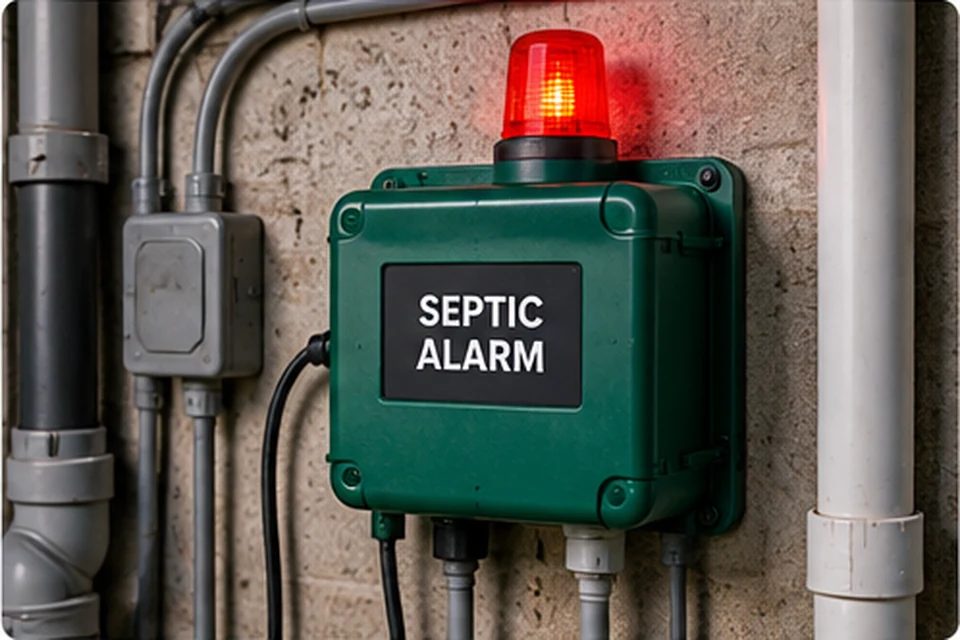
A red light on a septic alarm panel means the system has detected a problem. Angi explains that a green light means the alarm box has power and a red light means there is an issue. The HyAir aerobic system manual says its red light illuminates when an alarm condition has been triggered and that owners should contact their service provider immediately. Some systems use an amber warning light instead; the Indian Health Service describes one mounted near the electric box.
What should you do when your septic alarm goes off?
When a septic alarm goes off, silence it, check the power, cut water use and watch whether it clears. Angi’s step-by-step guidance:
- Silence the alarm. Press the button (usually red) on the alarm box. Angi notes this will not solve the problem, but it lets you investigate calmly.
- Check the power. Look for a local outage and confirm the septic system’s breaker is on. Premier Tech adds: reset any tripped GFCI outlet that powers the control panel.
- Look at the tank area. Check for standing water, pooling rainwater or signs of a leak.
- Reduce water use. Angi suggests conserving water for 10 or more hours so the pump can catch up. Oklahoma State University Extension also advises reducing nonessential water use until the problem is fixed.
If the alarm clears and does not come back, the cause was likely a temporary overload. Premier Tech says that if the alarm resets within a few hours after you ease the load, the problem has likely resolved.
Silencing vs. fixing a septic alarm
Silencing a septic alarm only turns off the sound; the condition that triggered it is still there. The alarm’s job is to give you time to act before the tank overflows or sewage backs up. A float switch that keeps sensing high water will keep triggering the alarm, and the red light usually stays on until the water level drops or the fault is repaired.
Never disconnect an alarm to stop repeated nuisance alarms. If your alarm sounds often, that pattern is information a septic technician needs. Premier Tech says repeated alarms, combined with other symptoms, suggest a component that is beginning to fail or a system that is overloaded and struggling to keep up.
Is it safe to work on a septic alarm or pump yourself?
Septic pumps, control panels and aerobic units carry electrical and confined-space hazards, so most repairs belong to a professional. Oklahoma State University Extension tells aerobic system owners: if an alarm sounds, call your maintenance provider and do not try to repair the system yourself. Texas A&M AgriLife Extension lists electrical shock as a hazard of aerobic systems and notes that control panels can be secured with screws or locks. The HyAir owner’s manual warns that blowers can start automatically without warning and to always turn off the power supply before working on the equipment.
Homeowner checks are limited to the safe basics: the breaker, the GFCI outlet, water use and a visual look at the yard. Do not open the tank or the pump chamber.
When should you call a septic professional about an alarm?
Call a septic professional if the alarm keeps sounding after you reset the power and cut water use, or right away if sewage is backing up. Angi recommends calling a pro when the alarm keeps sounding after troubleshooting, when you notice sewage backups or odors, or when there is visible damage to the tank or drain field. Premier Tech sorts the urgency into levels:
| What you see | How soon to call (per Premier Tech) |
|---|---|
| Alarm continues after resetting breaker and GFCI | Contact a septic specialist |
| Repeated alarms, a fault light, slow drains or a faint outdoor sewage smell | Needs professional attention soon |
| Sewage backing up, waterlogged ground, all drains stopped or a strong outdoor smell | Call a septic specialist as soon as possible |
Angi also notes that an alarm does not necessarily mean an immediate backup, so you usually have time to investigate before it becomes an emergency. For the broader list of warning signs, see signs of septic system failure.
Aerobic septic alarms and maintenance contracts
Aerobic septic systems rely on alarms and regular service visits more than conventional systems. The EPA says systems with electrical float switches, pumps or mechanical components should generally be inspected about once a year, and recommends a service contract. In Texas, the Texas Commission on Environmental Quality (TCEQ) requires aerobic system maintenance reports at least every four months, or every six months if the system has an electronic monitor or automatic radio or telephone alerts, and makes the maintenance provider responsible for keeping that electronic monitoring working.
If your aerobic system is under a maintenance contract, call the provider named on the contract first. TCEQ also warns Texas owners not to use swimming pool chlorine tablets in the disinfection unit; only calcium hypochlorite tablets certified for wastewater disinfection should be used. For more on how these systems work, see the aerobic septic systems guide and aerobic vs. conventional septic.
Finding a septic company to fix an alarm
A septic alarm that won’t clear usually needs a technician to test the pump, float switches and controls. The Septic Guide lists 28,546 septic companies and licensed septic professionals in 45 states, with 27,065 matched to license or certification lists published by 26 state agencies. Find a licensed septic company near you, and if your state licenses maintenance providers, check the provider’s license or review your state’s rules under septic licensing. For repair options, see the septic repair guide.
Common questions
Why is my septic alarm going off?
A septic alarm goes off when a float switch detects water that is too high (or, on some systems, too low) in the pump tank or treatment unit. Angi lists the common causes as heavy water use, heavy rain or flooding, a drain field blockage, a power outage, and a failed pump, float switch or alarm. On aerobic systems, the alarm can also signal a failed aerator motor.
How do I turn off my septic alarm?
Most septic alarms have a silence button, usually red, on the alarm box. Pressing the silence button stops the sound but does not fix the problem that triggered the septic alarm, so the next steps are to check the breaker, cut water use and watch whether the red light clears. If the light stays on, call a septic professional.
Is a septic alarm an emergency?
A septic alarm is not always an emergency, but it should never be ignored. Angi notes that an alarm does not necessarily mean an immediate backup, and Premier Tech says a minor alarm after heavy rain or heavy water use often resets on its own within a few hours. Sewage backing up, waterlogged ground or all drains stopping calls for a septic professional right away.
Can I use water when my septic alarm is going off?
Use as little water as possible while a septic alarm is going off. Oklahoma State University Extension says to reduce nonessential water use until the problem is fixed, and Angi suggests conserving water for 10 or more hours to let the pump catch up. Skip laundry, dishwashing and long showers until the alarm clears or a technician has checked the system.
What does the red light on an aerobic septic system mean?
The red light on an aerobic septic system's control box means an alarm condition has been triggered. The HyAir owner's manual tells owners to contact their service provider immediately when the red light comes on, and the Indian Health Service explains that an aerobic system's warning light indicates a motor malfunction or an abnormal water level. A green light normally just means the panel has power.
Sources
- Septic Alarm Going Off? Here's What You Should Do, Angi. Accessed October 20, 2026. Causes (high/low water, power, faulty parts); silence, check power, reduce water 10+ hours; green vs red light
- Why Your Septic Alarm Is Going Off and What to Do About It, Premier Tech Water and Environment. Accessed October 20, 2026. Temporary high water; tripped breaker or GFCI; escalation levels
- Aerobic Treatment System (PSS-2275), Oklahoma State University Extension. Accessed October 20, 2026. Pump tank high-water alarm when more than half full; call provider, do not repair yourself; listen for compressor
- Aerobic System homeowner information (Oklahoma City Area), Indian Health Service. Accessed October 20, 2026. Warning light signals motor failure or abnormal water level; call installer or maintenance provider
- HyAir Owners Manual (hosted by Rhode Island DEM), Advanced Wastewater Solutions / Rhode Island Department of Environmental Management. Accessed October 20, 2026. Red light = alarm condition; blowers can start without warning; turn off power before working
- OSSF Maintenance, Texas Commission on Environmental Quality. Accessed October 20, 2026. Electronic monitoring; report interval 4 months (6 with monitor); EPA-certified chlorine tablets only
- Living with an Aerobic Treatment Unit and Spray Field (B-6234), Texas A&M AgriLife Extension. Accessed October 20, 2026. Electrical shock hazard; control panels secured with screws or locks
- Frequent Questions on Septic Systems (January 19, 2025 snapshot), U.S. Environmental Protection Agency. Accessed October 20, 2026. Pumps and controls often replaced every 10-20 years
- How to Care for Your Septic System, U.S. Environmental Protection Agency. Accessed October 20, 2026. Systems with float switches, pumps or mechanical parts: inspect about once a year; keep a service contract