The short answer
A septic tank riser is a watertight pipe-like collar that extends a buried septic tank's access opening up to the ground surface, so the tank can be inspected and pumped without digging. Risers come in concrete, polyethylene, polypropylene, PVC and fiberglass, and HomeAdvisor puts the cost at $300 to $600. Every riser needs a secure, child-resistant lid: Onsite Installer reports children fall into septic tanks every year when lids are not fastened.
A septic tank riser is a watertight extension that brings a buried septic tank’s access opening up to the ground surface, so the tank can be inspected and pumped without digging. Without a riser, a septic tank lid stays buried, and someone has to find it and dig it up at every service visit. A riser with a secure lid turns that job into lifting a cover.
What is a septic tank riser?
A septic tank riser is a vertical collar, usually round, that attaches to a septic tank’s manhole or inspection port and extends up to finished grade, where it is capped with a lid. Septic Solutions’ buyer’s guide describes common riser diameters from 12 to 24 inches, with heights available from as little as 2 inches to 5 feet; stackable sections extend deeper tanks.
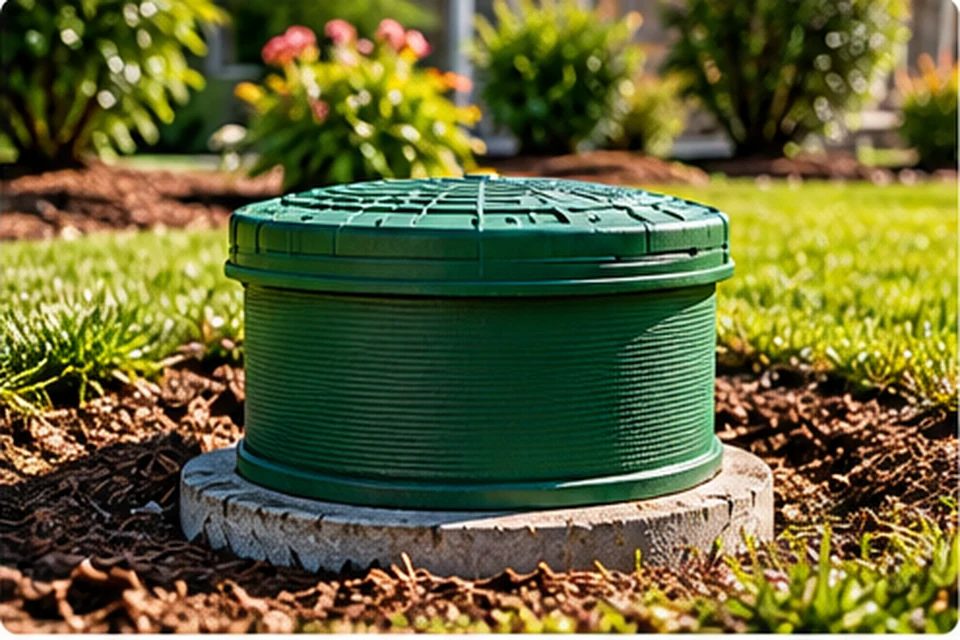
Most septic tanks have more than one opening. Oregon State University Extension recommends installing risers from the central manhole and the inspection ports to the surface or near the surface. On an existing yard, you may already have one: the EPA notes that an access riser often appears as a black or green disc in the yard, and that the septic tank is usually about 10 feet from the building.
What are the benefits of a septic tank riser?
The main benefit of a septic tank riser is fast, digging-free access to the tank. The benefits add up over the life of the system:
- No digging at each service. Wind River Environmental notes that with a riser, accessing the tank is as simple as opening a cover on the surface of the ground.
- Lower service costs over time. Digging to a buried tank can be laborious and expensive, especially when the tank is deep, according to Wind River.
- Faster pumping and inspections. Onsite Installer notes that risers reduce the time spent locating and excavating the tank.
- Less risk of damage. Avoiding excavation reduces the chance of damaging the tank or nearby pipes, Wind River adds.
- Easier routine monitoring. The EPA recommends an inspection at least every 3 years and pumping typically every 3 to 5 years, and a surface lid makes it easier to keep that schedule.
If you are planning regular service anyway, see how often to pump a septic tank and septic inspection.
What are septic tank risers made of?
Septic tank risers are made of concrete, polyethylene, polypropylene, PVC or fiberglass, according to Onsite Installer.
| Material | Strengths | Trade-offs |
|---|---|---|
| Polyethylene / polypropylene | Light, crack-resistant; Septic Solutions recommends polyethylene for freeze-thaw climates | Lid must match the riser material |
| PVC | Light, corrosion-resistant, affordable (Septic Solutions) | Less durable in extreme conditions |
| Concrete | Very durable and heavy; cast-in-place risers resist frost heave (Onsite Installer) | Harder to install; may need extra sealing or wrapping to stay watertight |
| Fiberglass | Light, corrosion-resistant | Typically more expensive (Septic Solutions) |
Onsite Installer notes that newer concrete tanks typically use an adapter ring cast into the opening, with a polyethylene or polypropylene riser attached to it. Polyethylene and fiberglass tanks usually have risers built in at the factory, and any added riser should match the tank material and follow the manufacturer’s instructions. Onsite Installer also warns against placing a concrete lid on a riser made of another material, which usually leads to deformation of the riser and lack of watertightness.
How is a septic tank riser installed?
A septic tank riser is installed by uncovering the tank opening, attaching an adapter or the riser directly to the tank, sealing every joint, stacking sections to the right height and backfilling around it. Installing a riser during a scheduled pumping is efficient, because the lid is already dug up.
Measure first
Septic Solutions lists the measurements to take before buying: the diameter and shape of the tank’s access opening, the depth from the ground to the top of the opening, and the tank’s material (concrete, fiberglass or plastic), since some risers are made for specific tank materials.
Seal every joint
A septic tank riser must be watertight. Onsite Installer says risers and their connections must resist root penetration as well as water, summed up as “If roots can get in, it’s not watertight!” Concrete risers should use a tongue-and-groove joint with mastic or other sealants, and retrofits on a mismatched opening may need a butyl rubber connection plus additional sealant. Follow the manufacturer’s instructions for the sealant. A leaky riser lets groundwater and rainwater into the tank, adding load the system was not designed for.
Set the height
Septic Solutions recommends bringing the access point to ground level or 1 to 2 inches above it, and Onsite Installer’s authors prefer lids a couple of inches above the surface for easier service. Kansas State University Extension recommends installing risers from the manhole and inspection ports to within 12 inches of the surface, before the access cover is buried. Some states and permitting authorities require lids to be buried under a few inches of soil; in that case, Onsite Installer suggests placing a small metal marker on top so a service provider can find it with a metal detector.
Record the location
Kansas State University Extension recommends permanently marking the tank’s location or sketching a map from fixed landmarks such as the house corners. Keep that map with your septic maintenance records.
How much does a septic tank riser cost?
A septic tank riser costs $300 to $600, according to HomeAdvisor’s septic system cost guide. That range is for a riser added to make the tank easier to access for maintenance. The final price for a septic tank riser depends on:
- Number of risers. Covering the inlet, outlet and central opening costs more than a single riser.
- Burial depth. A deeper tank needs taller or stacked riser sections and more digging.
- Material. Septic Solutions notes fiberglass is typically more expensive, and concrete risers are heavier and harder to install.
- Timing. Adding risers during a pumping visit avoids a second excavation.
For comparison, HomeAdvisor puts septic tank pumping at around $300 to $600, depending on tank size. See septic tank pumping cost for current figures.
Are septic tank risers safe? Lid security matters
A septic tank riser is only safe if its lid is secured so children and animals cannot open it. Onsite Installer reports that every year there are several reports of children falling into septic tanks, which can result in serious injury or death when a lid is not securely fastened to the riser.
Safety guidance from Onsite Installer and Septic Solutions:
- Use nonstandard fasteners or screws so children cannot gain access (Onsite Installer).
- Consider a secondary safety device that attaches inside the riser or at the tank opening to stop a person or animal from falling in (Onsite Installer).
- Choose screw-on, child-resistant lids over snap-on lids, which are quicker to remove but less secure (Septic Solutions).
- Pick heavy-duty lids where vehicles may pass over the riser (Septic Solutions).
- Choose UV-resistant lids to prevent fading and cracking, and replace any lid that is cracked, brittle or loose (Septic Solutions).
Never leave a riser uncovered, even briefly, and never climb into or lean into a septic tank; work inside a tank belongs to trained professionals.
Do septic tank risers require a permit?
Septic tank riser requirements vary by state and county. Onsite Installer notes that some states and permitting authorities require lids to be buried a few inches below the surface, and Septic Solutions advises checking local regulations for lid security or material requirements before installing. Ask your county health department whether a permit or inspection is needed before adding a riser, or start with septic licensing by state and the septic permits guide.
Finding a septic company to install risers
The easiest time to add a riser is at your next scheduled pumping, when the tank is already uncovered. The Septic Guide lists 28,546 septic companies and licensed septic professionals in 45 states, with 27,065 matched to license or certification lists published by 26 state agencies. Find a licensed septic company near you, ask whether it installs risers during septic tank pumping, and check the contractor’s license before work begins.
Common questions
What is a septic tank riser?
A septic tank riser is a watertight vertical extension that connects a buried septic tank's access opening to the ground surface, topped with a secure lid. A septic tank riser lets a technician open the tank for pumping or inspection without digging. Risers are made of concrete, polyethylene, polypropylene, PVC or fiberglass.
How much does a septic tank riser cost?
A septic tank riser costs $300 to $600, according to HomeAdvisor's septic cost guide. The price of a septic tank riser depends on the material, the diameter, how deep the tank is buried and whether the work is done during a scheduled pumping, when the tank lid is already uncovered.
Are septic tank risers worth it?
Septic tank risers are usually worth it for any tank that is pumped or inspected on a regular schedule. Without a septic tank riser, the lid has to be found and dug up at every service visit; Wind River Environmental notes that excavation can be laborious and expensive and risks damaging the tank and pipes. The EPA recommends inspection at least every 3 years and pumping typically every 3 to 5 years, so the savings repeat.
Should a septic riser lid be above ground?
Many installers prefer a septic riser lid that sits slightly above grade. Onsite Installer's authors prefer lids a couple of inches above the surface, and Septic Solutions recommends ground level or 1 to 2 inches above it. Some states and permitting authorities require lids to be buried under a few inches of soil, so check local rules before installing a septic riser.
How do you keep children safe around a septic riser?
A septic riser lid must be securely fastened so a child cannot open it. Onsite Installer reports that children fall into septic tanks every year, sometimes fatally, when a lid is not securely fastened to the riser, and recommends nonstandard fasteners or screws plus an optional safety device inside the riser. Replace any cracked, faded or loose septic riser lid right away.
Sources
- Match the Correct Riser and Lid to the Tank to Ensure Safety and Improved Access for Maintenance, Onsite Installer. Accessed October 20, 2026. Materials; watertight seals; lid safety and nonstandard fasteners; children falling into tanks
- Septic Tank Risers Buyer's Guide, Septic Solutions. Accessed October 20, 2026. Diameters 12-24 inches; heights 2 inches to 5 feet; lid types; measuring before buying
- Septic System Installation Cost, HomeAdvisor. Accessed October 20, 2026. Septic tank riser $300-$600; pumping $300-$600
- Septic Tank Maintenance: A Key to Longer Septic System Life (MF-947), Kansas State University Research and Extension. Accessed October 20, 2026. Risers to within 12 inches of the surface; mark or map the tank location
- Septic Tank Maintenance (EC 1343), Oregon State University Extension Service. Accessed October 20, 2026. Install risers from the central manhole and inspection ports to or near the surface
- Frequent Questions on Septic Systems (January 19, 2025 snapshot), U.S. Environmental Protection Agency. Accessed October 20, 2026. Access riser looks like a black or green disc; tank usually about 10 feet from the building
- How to Care for Your Septic System, U.S. Environmental Protection Agency. Accessed October 20, 2026. Inspect at least every 3 years; pump typically every 3-5 years
- Save Money With a Septic Tank Riser, Wind River Environmental. Accessed October 20, 2026. Benefits: no digging, faster service, less risk of damaging tank and pipes