The short answer
A septic system treats a home's wastewater on the property and has no monthly bill, while a sewer connection sends wastewater to a municipal treatment plant for a monthly fee. Angi puts septic installation at $3,500 to $11,800 and a sewer line at $1,450 to $5,720 (2026), with sewer bills averaging about $66 a month and septic pumping about $550 every three to five years. Switching an existing home from septic to sewer costs around $6,000 or more, according to HomeAdvisor.
A septic system treats a home’s wastewater on the property, while a sewer connection carries wastewater through public pipes to a municipal treatment plant. The practical differences come down to who maintains the system and how you pay for it: septic owners pay more up front and handle pumping and repairs themselves, while sewer customers pay a monthly bill and let the utility maintain the public pipes. The U.S. EPA says one in five U.S. homes have septic systems.
What is the difference between septic and sewer?
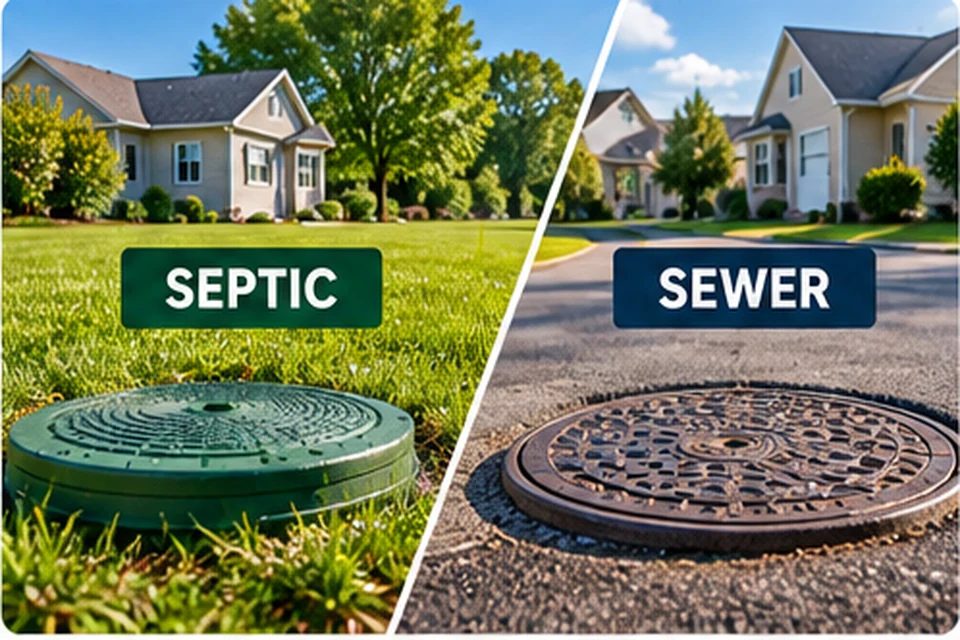
The difference between septic and sewer is where the wastewater is treated and who is responsible for it. A septic system sits on your property: wastewater flows into a septic tank, where solids settle, and the liquid moves to a drain field where the soil finishes treatment. A sewer connection sends wastewater from the house to the main sewer line, then through city pipes to a treatment facility.
Angi summarizes the key differences:
- Responsibility. The septic owner hires professionals to pump and inspect the tank. With sewer, the city maintains the public pipes.
- Land. Angi says septic requires at least 1/4 to 1/3 acre, and some counties or states may require 1/2 to 1 acre. Sewer has no land requirement.
- Monthly cost. Septic has no monthly bill. Sewer customers pay a monthly fee.
- Environmental impact. Angi notes septic is considered more eco-friendly only if it is maintained, because a failing system can leak untreated wastewater into soil, well water or waterways.
For a deeper look at how on-site treatment works, see how septic systems work.
Septic vs. sewer pros and cons
| Septic system | Public sewer | |
|---|---|---|
| Upfront cost | Higher: $3,500 to $11,800 to install (Angi) | Lower: $1,450 to $5,720 for a sewer line (Angi) |
| Monthly cost | None | $15 to $150, average about $66 (Angi) |
| Maintenance | Owner pays for pumping (about $550 every 3 to 5 years, Angi) and repairs | City maintains the public pipes |
| Lifespan | Tank about 20 to 40 years, leach field about 50 years (Angi) | About 50 to 100 years depending on pipe material (Angi) |
| Land needed | At least 1/4 to 1/3 acre; some areas require 1/2 to 1 acre (Angi) | None |
| Independence | Not tied to city utilities or outages in the public system | Service can be disrupted by clogs or repairs in the public system |
| Main risks | Clogs from grease, food and chemicals; failure if not maintained | Ongoing monthly bill; less independence |
Septic system pros
Angi lists the advantages of septic as a lower monthly cost, independence from city utilities and a long lifespan when maintained.
Septic system cons
Angi lists the disadvantages of septic as more maintenance, a higher upfront cost and clog risk. Chemical drain cleaners can harm the bacteria the system relies on, and fats, oils, grease and food scraps can clog it. Neglect gets expensive: see signs of septic system failure.
Sewer pros and cons
Angi lists the advantages of sewer as low maintenance, a lower upfront cost and no land requirement. The disadvantages are less independence, a permanent monthly bill and service that can be disrupted by clogs or repairs in the public system.
How much do septic and sewer cost in 2026?
Septic costs more to install, while sewer costs more every month. Here are the 2026 figures from Angi and HomeAdvisor:
| Cost item | Angi (2026) | HomeAdvisor (2026) |
|---|---|---|
| Septic system installation | $3,500 to $11,800 | $3,590 to $12,463 (most spend about $8,016) |
| Sewer line installation | $1,450 to $5,720 | $1,423 to $5,775 (average about $3,478) |
| Sewer line per linear foot | — | $50 to $250 |
| City water/sewer connection | — | $500 to $20,000, depending on local regulations |
| Monthly sewer bill | $15 to $150 (average about $66) | — |
| Septic tank pumping | About $550, every 3 to 5 years | $300 to $600, depending on tank size |
For a detailed breakdown of on-site system prices, see septic system installation cost and septic tank pumping cost.
What do septic and sewer cost over time?
Over a decade, routine septic upkeep usually costs less than a sewer bill, but septic owners carry the risk of a major repair. Using Angi’s averages as a simple illustration:
- Sewer: $66 a month is $792 a year, or $7,920 over 10 years, before any rate increases.
- Septic: pumping every 3 to 5 years at about $550 per visit works out to two or three pumpings over 10 years, or roughly $1,100 to $1,650.
That comparison leaves out septic inspections, which the EPA recommends at least every 3 years, and repairs. The EPA notes that many septic pumps and controls need replacement every 10 to 20 years, and an eventual drain field or system replacement is a large one-time cost. Michigan EGLE says a conventional septic system lasts about 25 to 40 years, while the EPA says a concrete tank may last 50 years or more. See how long septic systems last.
How much does it cost to switch from septic to sewer?
Switching an existing home from septic to city sewer costs around $6,000 or more, according to HomeAdvisor. The total usually includes three parts:
- The sewer line from the house to the main, which HomeAdvisor prices at $50 to $250 per linear foot, so a home far from the street pays more.
- The connection or tap fee charged by the city or utility, which HomeAdvisor says can run $500 to $20,000 depending on local regulations.
- Decommissioning the septic tank, which HomeAdvisor puts at $500 to $1,000.
Angi notes that connecting to sewer requires a licensed professional and that some cities fund moves away from septic, sometimes at little or no out-of-pocket cost to homeowners. Ask your municipality whether a cost-sharing or assessment program applies. For low-income rural homeowners repairing a septic system instead, the EPA lists USDA Single-Family Housing Repair Loans of up to $20,000 and grants of up to $7,500 for elderly, very-low-income homeowners.
Do you have to connect to sewer when it becomes available?
Whether you must connect to a public sewer depends on state and local rules. Washington State’s rule (WAC 246-272A-0025) is one example: when a septic system in a sewer utility’s service area fails, the local health officer can require connection if the utility allows it and adequate sewer is within 200 feet, measured along the usual or most feasible route; otherwise, repair is allowed only if a conforming system can be installed. Washington also lets local boards of health require connection for new development.
Other states, counties and cities set their own connection rules. Check with your local sewer utility, county health department or the agencies listed under septic licensing by state.
Is septic or sewer better?
Neither septic nor sewer is better in every case. Sewer is the simpler choice where it is available and affordable to connect, because the utility handles treatment and the homeowner avoids pumping and drain field risk. Septic is the practical choice for rural lots without sewer access, and it can be cheaper to operate over time for owners who keep up with pumping and inspections. If you are deciding whether to connect to a newly available sewer, compare the connection cost and future monthly bills against the age and condition of your septic system; a septic inspection gives you that baseline.
Finding a septic professional
Whether you are keeping a septic system or decommissioning one to connect to sewer, the work calls for a licensed septic professional. The Septic Guide lists 28,546 septic companies and licensed septic professionals in 45 states, with 27,065 matched to license or certification lists published by 26 state agencies. Find a licensed septic company near you and check the contractor’s license before hiring.
Common questions
Is septic or sewer cheaper?
Sewer is usually cheaper to install and septic is usually cheaper to operate. Angi puts a septic system at $3,500 to $11,800 and a sewer line at $1,450 to $5,720, but sewer bills average about $66 a month while a septic system has no monthly bill and needs pumping about every three to five years at around $550 per visit. Over many years, the monthly sewer bill can add up to more than septic upkeep, although a septic system eventually needs repairs or replacement.
How much does it cost to switch from septic to sewer?
Switching a home from septic to city sewer costs around $6,000 or more, according to HomeAdvisor. The total for a septic-to-sewer conversion includes the sewer line from the house to the main ($50 to $250 per linear foot), the city's connection or tap fee ($500 to $20,000 depending on local rules) and decommissioning the old septic tank ($500 to $1,000).
Do I have to connect to sewer when it becomes available?
Whether a homeowner has to connect to a new public sewer depends on state and local rules. In Washington, for example, state rules let the local health officer require a home with a failed septic system to connect when adequate sewer is within 200 feet and the utility allows it. Many cities and counties set their own connection rules, so check with the local sewer utility or health department.
Does septic or sewer last longer?
Angi estimates a septic tank lasts about 20 to 40 years and a city sewer system about 50 to 100 years depending on pipe material. Michigan EGLE puts a conventional septic system at about 25 to 40 years, and the EPA says a concrete septic tank may last 50 years or more. Septic pumps and controls often need replacement every 10 to 20 years.
Is septic or sewer better for resale?
Neither septic nor sewer is automatically better for resale; what matters is the system's condition and the local market. A well-maintained septic system with pumping and inspection records is a normal feature of rural homes, since the EPA says one in five U.S. homes have septic. Buyers of septic homes should order a septic inspection before closing.
Sources
- Septic vs. Sewer: Which Wastewater Management System Is Best for Your Property?, Angi. Accessed October 20, 2026. Septic install $3,500-$11,800; sewer line $1,450-$5,720; sewer bills $15-$150/mo, avg ~$66; pumping ~$550; lifespans; land needs
- How Much Does Sewer Line Installation Cost?, HomeAdvisor. Accessed October 20, 2026. Sewer line $1,423-$5,775, avg $3,478; $50-$250/ft; city connection $500-$20,000; septic-to-sewer ~$6,000+; decommissioning $500-$1,000
- Septic System Installation Cost, HomeAdvisor. Accessed October 20, 2026. Septic system $3,590-$12,463, avg ~$8,016; pumping $300-$600
- Septic System Care and Maintenance (January 19, 2025 snapshot), U.S. Environmental Protection Agency. Accessed October 20, 2026. One in five U.S. homes have septic systems
- How to Care for Your Septic System, U.S. Environmental Protection Agency. Accessed October 20, 2026. Inspect at least every 3 years; pump typically every 3-5 years
- Frequent Questions on Septic Systems (January 19, 2025 snapshot), U.S. Environmental Protection Agency. Accessed October 20, 2026. Concrete tank 50+ years; pumps/controls 10-20 years; USDA repair loans and grants
- Septic Systems FAQ, Michigan Department of Environment, Great Lakes, and Energy. Accessed October 20, 2026. Conventional system lasts about 25-40 years
- WAC 246-272A-0025: Connection to public sewer system, Washington State Legislature. Accessed October 20, 2026. Washington: on failure, connection may be required if adequate sewer is within 200 feet