The short answer
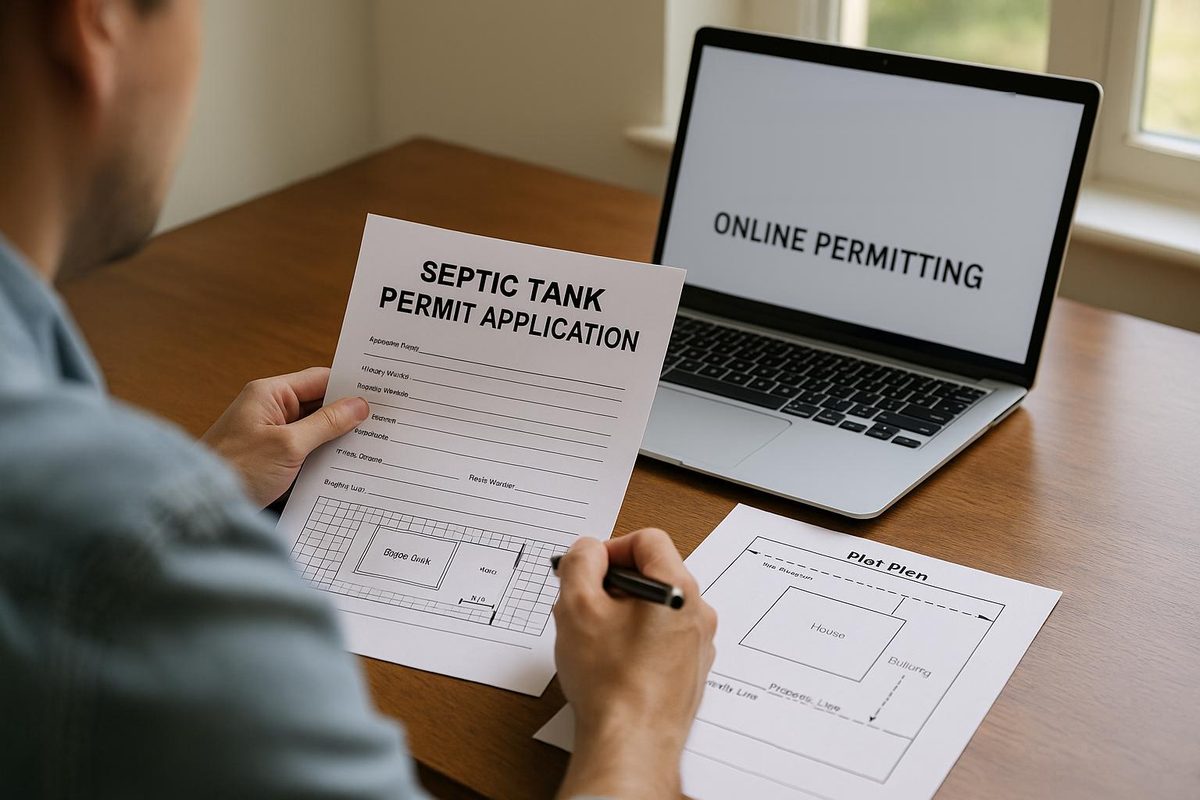
A septic permit is written approval from your local permitting authority, usually a county or city health or environmental department, to build, alter or repair a septic system. The EPA notes that home septic systems are regulated by states, tribes and local governments, not the federal government, so the issuing office and fees vary by location. The usual sequence is a site and soil evaluation, a system design, a construction permit, installation, and a final inspection before the system can be used.
A septic permit is written approval from your local permitting authority to install, alter or repair a septic system on your property. The U.S. Environmental Protection Agency says a septic system permit “is issued by your local permitting authority (i.e., local health or environmental department).” The EPA does not regulate single-family home septic systems; states, tribes and local governments do, which is why the office you deal with, the paperwork and the fees all depend on where the property is.
What is a septic permit?
A septic permit is the document that authorizes a specific septic system design on a specific lot. A septic permit usually comes after the permitting office has evaluated the site and soil and approved a design, and it sets the conditions the installer must follow. Many jurisdictions issue more than one approval: a construction permit before work starts and an operation permit or certificate after the finished system passes inspection.
The EPA’s septic financing guide notes that septic permitting “is typically done at the local, regional, or state level,” and adds that not all jurisdictions issue permits for septic systems. Your local health department is the place to confirm what applies to your property.
Who issues septic permits?
Septic permits are usually issued by a county or city health department, an environmental health division, or a state agency office acting through local staff. The EPA says local health departments usually issue construction and operating permits under state public health laws. The state examples below show how different the arrangements are.
| State | Who handles septic permits | Source |
|---|---|---|
| Texas | Local governments acting as TCEQ “authorized agents” | TCEQ |
| North Carolina | County environmental health offices, working with the state On-Site Water Protection Branch | NC DPH; Chatham and Mecklenburg counties |
| Florida | County health departments; Florida DEP in Northwest Florida and Marion County | Florida DEP |
| Pennsylvania | Local agencies, through certified Sewage Enforcement Officers | Pennsylvania DEP |
| Massachusetts | Local Boards of Health, with MassDEP oversight | MassDEP |
Texas: TCEQ and authorized agents
Texas septic permits are handled mainly by local governments acting as authorized agents of the Texas Commission on Environmental Quality (TCEQ). TCEQ says the authorized agent is responsible for “reviewing OSSF permit applications, conducting inspections, investigating complaints, and more.” Texas calls septic systems on-site sewage facilities (OSSFs). See Texas septic licensing for the state’s installer license rules.
North Carolina: county environmental health
North Carolina septic permits come from county environmental health offices; the state On-Site Water Protection Branch says it works “with local health departments, contractors, builders and others.” In Chatham County, an owner planning to build, alter or expand must apply for a site evaluation, and “an Improvement Permit and Authorization to Construct must be obtained prior to installation of septic system.” See North Carolina septic licensing.
Florida: county health departments and DEP
Florida septic permits (Florida uses the term OSTDS, for onsite sewage treatment and disposal system) are issued by the Environmental Public Health Program of each county health department in most counties. Florida DEP says it “is permitting OSTDS in Northwest Florida and Marion County,” through an online portal. In county health department counties, the site evaluation “must be performed by a qualified professional.” See Florida septic licensing.
Pennsylvania: Sewage Enforcement Officers
Pennsylvania septic permits for individual on-lot systems are issued by local or joint local agencies through their Sewage Enforcement Officers (SEOs). Pennsylvania DEP says SEOs are certified by the State Board for Certification of Sewage Enforcement Officers, conduct soil profile and percolation testing, review designs, and approve or deny permit applications. SEOs are not DEP employees. See Pennsylvania septic licensing.
Massachusetts: local Boards of Health
Massachusetts septic permits are issued by local Boards of Health, which MassDEP describes as the primary regulators under the state’s Title 5 rules. The Board of Health issues a Disposal System Construction Permit to build, upgrade or expand a system and a Certificate of Compliance once the system has been built and inspected. See Massachusetts septic licensing.
What are the steps to get a septic permit?
The septic permit process follows the same broad sequence in most places, even though forms and names differ. The steps below are drawn from the Texas, North Carolina, Florida, Pennsylvania and Massachusetts programs above.
- Apply to the local permitting office. In Florida, an application includes an application form, a site plan and a building floor plan, plus the application fee.
- Site and soil evaluation. TCEQ says a septic system “must be designed on the basis of a site evaluation that accounts for local conditions.” In Chatham County, North Carolina, staff evaluate the soil “to determine its suitability for a subsurface septic system.” In Pennsylvania, the SEO runs soil profile and percolation tests.
- System design and plan review. The site evaluation drives the design. TCEQ notes that soil analysis often rules out a conventional system, which is when designs such as a mound system or an aerobic treatment unit come in. The permitting office reviews the plan.
- Construction permit. Once the design is approved, the office issues the construction approval, such as North Carolina’s Improvement Permit and Authorization to Construct or the Massachusetts Disposal System Construction Permit. Installation cannot start before this.
- Installation by a licensed installer. In Texas, “any work on an OSSF must be performed by a licensed installer,” with an exception for homeowners working on their own single-family residence.
- Final inspection and operation approval. The office inspects the installed system before it can be used. Chatham County says “an Operation Permit is issued upon inspection of the system.”
For what happens during the build itself, see septic system installation.
Who applies for a septic permit: the homeowner or the contractor?
A septic contractor can usually apply for the permit for the property owner; the EPA notes that a contractor can apply on your behalf. In Texas, anyone who is paid for any part of the septic process must be licensed by the state. Either way, the property owner is the one whose name and parcel the permit covers.
Do you need a permit to repair or replace a septic system?
A septic repair or replacement often requires a permit. TCEQ states that “almost all OSSFs must have a permit prior to any construction, installation, repair, extension, or other alteration.” Mecklenburg County, North Carolina, lists septic system repair and alteration as separate permit categories, and MassDEP’s construction permit covers upgrading or expanding a system as well as building a new one.
Which jobs count as a repair or alteration varies by jurisdiction, so ask your local office before replacing a drain field, tank or other major component. See septic repair and septic tank replacement cost for what those jobs involve.
How much does a septic permit cost?
Septic permit fees are set by each county or agency, so no national figure applies. Florida DEP says the county health department determines “the total permitting fee (including any county fees)” based on the system needed and the services requested. Mecklenburg County, North Carolina, publishes a fee schedule that shows a typical structure:
| Mecklenburg County, NC permit | Fee |
|---|---|
| New residential septic system (all permits and inspections) | $650 |
| New residential soil test and improvement permit only | $250 |
| Construction authorization (added to soil test fee) | $200 |
| Operation permit (added) | $200 |
| Septic system alteration | $300 |
| Use existing system | $100 |
| Septic system repair | No fee |
Treat these numbers as one county’s example, not a typical price elsewhere. Permit fees are only part of the project budget; see septic system installation cost for full project prices.
What happens if you install a septic system without a permit?
Installing a septic system without a permit can leave the property without the approvals it needs to be occupied. Mecklenburg County requires its operation permit before a certificate of occupancy can be obtained, and Chatham County says installation cannot begin until the Improvement Permit and Authorization to Construct are secured. In Texas, TCEQ authorized agents investigate complaints as part of running the local septic program.
Penalties and fixes for unpermitted work vary by jurisdiction. If you are buying a home with a septic system, ask the local permitting office whether a permit and final inspection are on file, and consider a septic inspection.
What is the difference between a septic permit and a septic license?
A septic permit covers a project on a property, while a septic license covers the person doing the work. Texas requires anyone paid for septic work to hold a state license, and Pennsylvania certifies the SEOs who review permits. Licensing rules differ widely by state; the septic licensing guide explains which states license installers and pumpers. For unfamiliar terms in a permit or design, see the septic glossary.
Find a licensed septic company
Septic permit work goes more smoothly with a contractor who holds the right state credential; the EPA notes that local health departments can also supply lists of licensed septic professionals. The Septic Guide lists 28,546 septic companies and licensed septic professionals in 45 states, and 27,065 of them are matched to license or certification lists from 26 state agencies. Find a licensed septic company near you, then confirm the credential with how to check a septic contractor license.
Common questions
Who issues a septic permit?
A septic permit is issued by the local permitting authority, which the EPA describes as the local health or environmental department. In some states a state agency or its local agents run the program: in Texas, local governments act as authorized agents of the TCEQ, and in Pennsylvania, local agencies issue permits through certified Sewage Enforcement Officers.
Do I need a permit to repair a septic system?
A septic repair often needs a permit. The Texas Commission on Environmental Quality says almost all on-site sewage facilities must have a permit before any construction, installation, repair, extension or other alteration. Rules differ by state and county, so check with the local permitting office before work starts.
How much does a septic permit cost?
Septic permit fees are set locally, so there is no national price. As one example, Mecklenburg County, North Carolina, charges $650 for a new residential septic system including all permits and inspections, $300 for an alteration and no fee for a repair.
Can a contractor pull the septic permit for me?
A septic contractor can usually apply for the permit on the owner's behalf, according to the EPA. In Texas, anyone who is paid for any part of septic work must hold a state license, so confirm the contractor's license before hiring.
Sources
- Frequent Questions on Septic Systems, U.S. Environmental Protection Agency. Accessed October 20, 2026. Permits issued by local permitting authority; EPA does not regulate single-family systems; contractor can apply on owner's behalf
- Financing Septic Systems Module, U.S. Environmental Protection Agency. Accessed October 20, 2026. Permitting typically at local, regional or state level; not all jurisdictions issue permits
- Basics for Septic Systems, Texas Commission on Environmental Quality. Accessed October 20, 2026. Almost all OSSFs need a permit before construction, installation, repair, extension or alteration; licensed installer rule
- How to Become a Texas On-Site Sewage Facility (Septic System) Authorized Agent, Texas Commission on Environmental Quality. Accessed October 20, 2026. Authorized agents review permit applications, conduct inspections, investigate complaints
- On-Site Wastewater Program, North Carolina Department of Health and Human Services, Division of Public Health. Accessed October 20, 2026. State branch works with local health departments
- Septic System Permits (On-Site Wastewater), Chatham County, North Carolina, Environmental Health Division. Accessed October 20, 2026. Site evaluation, Improvement Permit and Authorization to Construct, Operation Permit upon inspection
- Septic System Fee Schedule, Mecklenburg County Public Health, North Carolina. Accessed October 20, 2026. $650 new residential system; $0 repair; $300 alteration; operation permit required before certificate of occupancy
- Onsite Sewage FAQ - Permitting, Florida Department of Environmental Protection. Accessed October 20, 2026. DEP permits in Northwest Florida and Marion County; county health departments elsewhere; site evaluation by qualified professional
- Act 537: An Overview of the Sewage Facilities Program, Pennsylvania Department of Environmental Protection. Accessed October 20, 2026. Local agencies issue on-lot permits through certified Sewage Enforcement Officers who run soil profile and percolation tests
- Septic Systems/Title 5 Glossary, Massachusetts Department of Environmental Protection. Accessed October 20, 2026. Local Boards of Health are primary regulators; Disposal System Construction Permit; Certificate of Compliance