The short answer
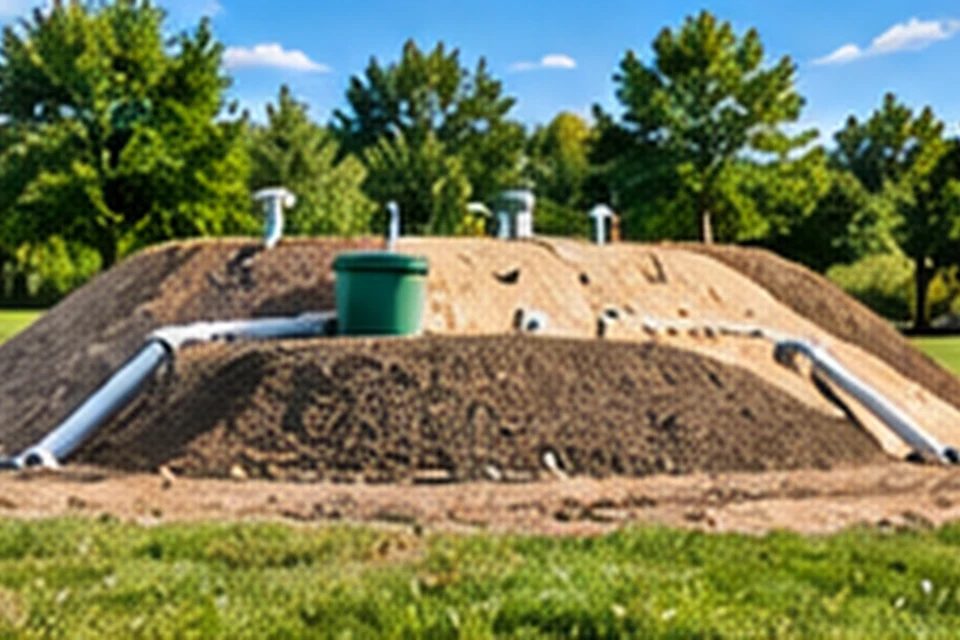
A mound septic system is a drain field built inside a raised mound of sand, used where soil is shallow, groundwater is high or bedrock is near the surface, according to the U.S. EPA. A pump chamber doses septic tank effluent into gravel and distribution pipes in the mound, and the effluent filters through the sand into the native soil below. HomeAdvisor (2026) puts mound systems at $10,000 to $20,000, with a $15,000 average.
A mound septic system is a septic system whose drain field is built inside a raised mound of sand above the natural ground. The U.S. EPA explains that mounds are used where soil is shallow, groundwater is high or bedrock is shallow: a pump chamber sends septic tank effluent to the mound in doses, and treatment happens as the effluent filters through the sand and into the native soil beneath. Penn State Extension calls these elevated sand mounds, built on a man-made sand base where the native soil is unsuitable or the water table is high.
The mound exists to add what the site is missing: enough unsaturated material between the drain field and groundwater or rock to treat wastewater before it gets there.
When is a mound septic system needed?
A mound septic system is needed when a soil evaluation shows the site cannot support a conventional drain field. The limiting conditions named by extension services are:
- Shallow soil over bedrock (EPA, University of Nebraska–Lincoln).
- High groundwater or seasonal water table (EPA, Penn State Extension).
- Slowly permeable soils (Purdue Extension) or soils that drain too slowly or too fast (University of Nebraska–Lincoln).
Purdue Extension notes that mounds cost more than conventional systems, so they are installed only where conventional absorption systems will not work. The University of Nebraska–Lincoln says mounds are not suitable for steeply sloping sites. Which conditions trigger a mound, and how deep the soil must be, is set by state and county rules; see septic permits and septic licensing.
How does a mound septic system work?
A mound septic system works in four stages, according to the University of Nebraska–Lincoln Extension:
- Septic tank. Wastewater settles in the septic tank. Solids form sludge, light material forms scum, and the middle layer of effluent moves on.
- Pump (dosing) chamber. Effluent collects in a pump or dosing tank. When the level reaches the “on” float, the pump starts; it stops at the “off” float.
- Pressure distribution in the mound. The pump sends effluent through small-diameter pipes in low-pressure doses. Purdue Extension describes the pressure network dosing effluent over the bed several times per day so it is applied uniformly.
- Sand and native soil. Effluent trickles through gravel into the sand fill and then into the natural soil beneath the mound, where final treatment occurs.
A mound system depends on electricity. The University of Nebraska–Lincoln warns that without power the pump stops and treatment does not occur. For the tank stage in detail, see how septic systems work.
What are the parts of a mound septic system?
A mound septic system has more components than a conventional system. The University of Nebraska–Lincoln and Purdue Extension describe these:
| Component | Role |
|---|---|
| Septic tank | Settles solids; UNL lists an effluent filter at the outlet baffle as a component |
| Dosing / pump chamber | Holds effluent and houses the pump, control floats and high-water alarm float (UNL) |
| Effluent pump or siphon | Sends measured doses to the mound (Purdue) |
| High-water alarm | Signals a pump or float failure; Purdue says the pump chamber should hold at least one day of reserve after the alarm trips |
| Feedline, manifold and laterals | Small pipes with drilled holes that spread effluent evenly; must drain after each dose to avoid plugging or freezing (Purdue) |
| Gravel bed | Washed aggregate at least 6 inches deep around the distribution pipes (Purdue) |
| Sand fill | The treatment layer between the gravel bed and native soil (UNL) |
| Cap and topsoil | Soil cover that sheds rain, protects against frost and supports grass (UNL); Purdue specifies 6 inches of topsoil |
| Monitoring wells | 4-inch pipes to check for ponding in the bed and sand (Purdue) |
If the alarm sounds, see septic alarm for what it means and what to do.
How big is a mound septic system?
A mound septic system is often much larger than people expect. The University of Nebraska–Lincoln explains that mound size depends on the number of bedrooms (which sets the design flow), the percolation rate of the top 12 inches of soil, the soil’s allowable loading rate and the slope. In its worked example, a three-bedroom home with a flow of 450 gallons per day, a percolation rate of 20 minutes per inch and a 2% slope needs a mound about 45 feet wide and 70 feet long, including the sloping sides.
Purdue Extension says mounds should be as long and narrow as the site allows, oriented with the long side along the slope contour, with 3:1 side slopes. The University of Nebraska–Lincoln recommends keeping large trees and shrubs with extensive roots at least 20 feet from the mound.
How is a mound septic system built?
A mound septic system is built in a strict sequence because damaging the native soil ruins it. Purdue Extension’s construction guide calls proper location and soil preparation essential, and lists these steps:
- Keep all vehicles off the mound area and 50 feet downslope before, during and after construction.
- Clear vegetation, cutting trees at ground level and leaving stumps in place.
- Plow the surface 7 to 8 inches deep along the contour, and only when the soil is dry enough to crumble rather than form a ribbon.
- Place specified medium sand from the upslope side and ends, keeping at least 6 inches of sand under the tracks of the equipment.
- Lay the gravel bed and pressure distribution pipes, cover them with aggregate and a permeable barrier, then cap with subsoil and 6 inches of topsoil, and seed with grass.
NC State Extension lists soil compaction or smearing during construction among the factors that shorten the life of any soil treatment system.
How much does a mound septic system cost in 2026?
A mound septic system is one of the most expensive septic system types. All three cost publishers reviewed agree on the range:
| Publisher (date) | Mound system cost |
|---|---|
| HomeAdvisor (June 2026) | $10,000–$20,000; average $15,000 |
| Angi (August 2026) | $10,000–$20,000 |
| Fixr (January 2025) | $10,000–$20,000 |
For comparison, HomeAdvisor and Angi put a conventional anaerobic system at $3,000 to $8,000. The University of Nebraska–Lincoln notes that mound design and construction costs are typically higher than for conventional systems and that mound repairs are difficult and may be expensive. See septic system installation cost.
How do you maintain a mound septic system?
A mound septic system needs regular tank pumping, pump checks and protection of the mound itself.
- Septic tank: The University of Nebraska–Lincoln says many homes pump every 2 to 3 years, with an annual professional inspection until a pumping interval is established; clean the effluent filter at each pumping.
- Pump chamber: Purdue Extension recommends removing sludge from both the septic tank and the pump chamber every 3 to 5 years so solids do not plug the distribution holes. The University of Nebraska–Lincoln recommends checking the pump, floats, electrical parts and alarm annually.
- Monitoring wells: Purdue Extension advises checking for ponding in spring, summer and fall; rising ponding over time may signal a future problem.
- The mound: Keep grass cover. The University of Nebraska–Lincoln recommends mowing only two or three times a year and never on wet soil, and keeping vehicles, animals and people off the mound.
- Water use: Both publications warn that high water use can overload a mound. Purdue Extension recommends faucet aerators and low-flow fixtures and keeping roof and footing drains out of the system.
How long does a mound septic system last?
Angi says a mound septic system can last up to 40 years with proper maintenance. Neither the Purdue nor the Nebraska extension publication gives a number; Purdue says good construction and maintenance support many years of trouble-free operation.
Mound vs. conventional septic system: what is the difference?
A mound septic system differs from a conventional septic system in where the drain field sits and how effluent gets there. A conventional drain field is dug into native soil and fed by gravity; a mound drain field sits in imported sand above grade and is fed by a pump. The EPA notes that mounds require substantial space and periodic maintenance, and the cost gap is wide: $3,000 to $8,000 for a conventional anaerobic system versus $10,000 to $20,000 for a mound, by HomeAdvisor’s figures. Compare all options in types of septic systems.
Find a licensed mound system installer
Mound systems are engineered to a specific soil test and built under permit, and construction mistakes are hard to undo. Find a licensed septic company with mound experience in The Septic Guide’s directory, and check the contractor’s license before hiring.
Common questions
Why would a house need a mound septic system?
A house needs a mound septic system when the natural soil cannot treat effluent in a conventional drain field. The EPA says mounds are used where soil is shallow, groundwater is high or bedrock is shallow. The University of Nebraska–Lincoln adds slowly or very rapidly permeable soils, and Purdue Extension notes mounds are installed only where conventional absorption systems will not work because they cost more.
How much does a mound septic system cost?
A mound septic system costs $10,000 to $20,000 according to HomeAdvisor (June 2026), which gives a $15,000 average. Angi (August 2026) and Fixr (January 2025) list the same $10,000 to $20,000 range. Mounds cost more than conventional systems, which HomeAdvisor and Angi put at $3,000 to $8,000.
How big is a mound septic system?
A mound septic system is sized by bedrooms, soil percolation rate, loading rate and slope. In a University of Nebraska–Lincoln example, a three-bedroom home with a 450-gallon-per-day flow, a 20-minute-per-inch perc rate and a 2% slope needs a mound about 45 feet wide and 70 feet long, including the sloping sides. Faster-draining soil or fewer bedrooms can allow a smaller mound.
Can you walk or mow on a septic mound?
People can walk lightly on a septic mound, but vehicles, animals and heavy traffic should stay off it. The University of Nebraska–Lincoln recommends mowing lawn grass on a mound only two or three times a year and never when the soil is wet, and suggests fencing. Purdue Extension says to keep traffic off the mound and the area directly downslope.
How long does a mound septic system last?
Angi says a mound septic system can last up to 40 years with proper maintenance. The University of Nebraska–Lincoln and Purdue extension publications do not give a lifespan, but both stress that regular tank pumping and keeping water use within design limits prevent the overloading that forces costly mound repair or replacement.
Sources
- Types of Septic Systems (archived January 19, 2025), U.S. Environmental Protection Agency. Accessed October 20, 2026. Mounds used for shallow soil, high groundwater or shallow bedrock; pump chamber doses effluent; substantial space and periodic maintenance
- Residential Onsite Wastewater Treatment: Mound Systems (G1475), University of Nebraska–Lincoln Extension. Accessed October 20, 2026. Components, dosing, sizing example (3 bedrooms ≈ 45 ft x 70 ft), maintenance; requires power
- Steps in Constructing a Mound (Bed-Type) Septic System (ID-163), Purdue University Cooperative Extension Service. Accessed October 20, 2026. Construction sequence, 3:1 side slopes, 6 inches of topsoil, monitoring wells, pump tank sludge removal every 3-5 years
- Septic System Basics, Penn State Extension. Accessed October 20, 2026. Elevated sand mounds built on a man-made sand base where soil is unsuitable or the water table is high
- How Much Does a Septic System or Tank Cost?, HomeAdvisor. Accessed October 20, 2026. Mound $10,000-$20,000, average $15,000 (June 2026)
- 9 Different Types of Septic Systems for Your Home, Angi. Accessed October 20, 2026. Mound $10,000-$20,000; up to 40 years with proper maintenance (Aug 2026)
- How Much Does It Cost to Install a Septic Tank System?, Fixr. Accessed October 20, 2026. Mound $10,000-$20,000 (Jan 2025)
- Increasing the Longevity of On-Site Sewage Treatment Systems, NC State Extension. Accessed October 20, 2026. Soil compaction or smearing during construction shortens soil system life