The short answer
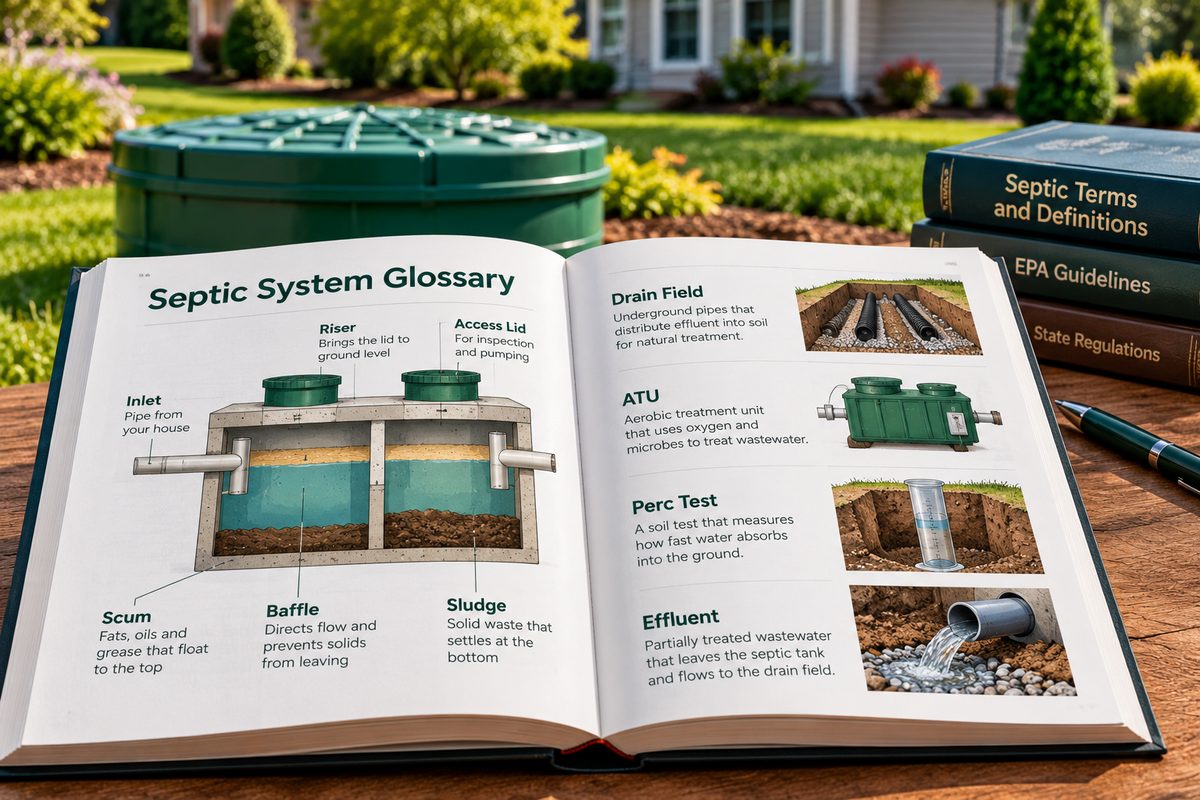
This septic system glossary defines 50 terms homeowners meet in permits, inspection reports and pumping invoices, from aerobic treatment unit (ATU) to water table. Definitions follow the U.S. EPA's Onsite Wastewater Treatment Systems Manual glossary, EPA SepticSmart pages, and state glossaries from MassDEP and the Washington State Department of Health. The three words people mix up most are sludge (solids that settle to the bottom of the tank), scum (grease that floats to the top) and effluent (the liquid that flows out to the drain field).
This septic system glossary defines 50 terms that show up in septic permits, system designs, inspection reports and pumping invoices. Each definition is written in plain language and follows the U.S. Environmental Protection Agency’s Onsite Wastewater Treatment Systems Manual glossary, EPA SepticSmart pages, and state agency glossaries from Massachusetts and Washington. Where The Septic Guide has a full guide on a term, the term links to it.
How are sludge, scum and effluent different?
Sludge, scum and effluent are the three layers of a working septic tank. The EPA explains that wastewater sits in the tank so solids settle to the bottom as sludge and oil and grease float to the top as scum; the liquid in between, the effluent, then exits the tank into the drain field. Compartments and a T-shaped outlet keep the sludge and scum inside the tank. For the full picture, see how septic systems work.
A
Additive
A septic additive is a product or biological agent sold to clean, treat or otherwise affect a septic system. MassDEP notes that it approves additives for use but does not endorse specific brands. See septic tank treatments.
Aerobic
Aerobic means having molecular oxygen present in the environment. Aerobic bacteria grow only where oxygen is present, which is the principle behind aerobic treatment units.
Aerobic treatment unit (ATU)
An aerobic treatment unit (ATU) is a septic treatment device that adds oxygen to wastewater to speed up bacterial breakdown. The EPA says ATUs “use many of the same processes as a municipal sewage plant, but on a smaller scale.” See aerobic septic systems.
Alarm
A septic alarm is a warning device, usually triggered by a float in a pump tank or by an ATU’s controls. Texas A&M AgriLife Extension says ATU alarms may indicate a high-water or low-air-pressure condition, and the University of Nebraska-Lincoln notes that pump tanks must have an alarm float to warn of pump or other system problems. See septic alarm.
Anaerobic
Anaerobic means characterized by the absence of molecular oxygen. It is the opposite of aerobic.
As-built plan
An as-built plan is a record, prepared by the installer, of how a septic system was actually constructed, including measurements and distances to nearby features. MassDEP’s glossary describes it as prepared by a licensed installer.
B
Baffle
A septic tank baffle is a barrier at the tank inlet or outlet that directs the flow of wastewater to keep solids from clogging the system. The EPA describes inlet and outlet baffles as the two types.
Biochemical oxygen demand (BOD)
Biochemical oxygen demand (BOD) is a common measurement of the concentration of biodegradable organic material in wastewater. BOD is typically expressed in milligrams per liter (mg/L).
Biomat
A biomat is the layer of biological growth and inorganic residue that develops where wastewater meets the soil. The EPA describes it as a bacteria layer that forms on the bottom and sides of drain field trenches.
Blackwater
Blackwater is wastewater from toilets: human body waste and the water used to flush it. MassDEP also counts water from sinks with garbage disposals as blackwater.
C
Cesspool
A cesspool is a pit that lets solids settle while liquids leach out into the surrounding ground. MassDEP notes that cesspools posing risks must be upgraded.
Chamber system
A chamber system is a drain field built from a series of connected chambers, with soil filled around and above them. The EPA describes chamber systems as an alternative to gravel drain fields. See chamber septic systems.
Clarifier
A clarifier is the settling compartment in an aerobic treatment unit where the microbes that treated the wastewater settle out of the water. Texas A&M AgriLife Extension lists the clarifier between the aeration chamber and the disinfection step.
Cluster system
A cluster system is a septic system under some form of common ownership that collects wastewater from two or more dwellings or buildings. The EPA says cluster systems send that wastewater to a shared treatment and dispersal site nearby.
Constructed wetland
A constructed wetland is a septic treatment system that mimics the processes of natural wetlands. The EPA says plants, microbes and media in the wetland remove pathogens and nutrients.
Conventional septic system
A conventional septic system is a septic tank plus a trench or bed subsurface wastewater infiltration system. The EPA says conventional systems are usually used at single-family homes and small businesses. See conventional septic system.
D
Design life
Design life is the number of years a septic system is expected to work before it needs replacement. MassDEP puts it at typically 20 to 30 years with good siting and maintenance. See how long septic systems last.
Distribution box
A distribution box (D-box) is a level, watertight box that splits septic tank effluent evenly among the outlet lines of a drain field.
Dosing tank
A dosing tank, also called a pump tank, is a watertight tank with a pump that sends effluent to the drain field in periodic doses. The University of Nebraska-Lincoln describes pump tanks made of concrete, fiberglass or plastic that collect septic tank effluent for a mound system.
Drain field (leach field)
A drain field, also called a leach field or soil absorption field, is the buried area where septic tank effluent is dispersed into the soil. The EPA defines it as “a shallow, covered, excavation made in unsaturated soil.” See drain field.
Drip distribution
Drip distribution is a way of dispersing effluent through small-diameter flexible tubing with in-line emitters placed near the surface. The EPA says drip systems can be used in many types of drain fields but need a dose tank and power.
E
Effluent
Effluent is partially or completely treated liquid wastewater flowing out of a septic tank, drain field, aerobic treatment unit or other treatment component.
Effluent filter
An effluent filter is a plastic screening device that fits into the outlet end of a septic tank to keep solids from leaving the tank and clogging the drain field.
Evapotranspiration system
An evapotranspiration system is a septic design in which treated water leaves by evaporation rather than soaking into the ground. The EPA says the effluent never filters to the soil or reaches groundwater, so this design only suits dry, sunny climates.
G
Grease trap
A grease trap is a watertight unit on the building sewer line that separates grease and oil from wastewater before it reaches the septic tank. MassDEP notes that restaurants need a grease trap ahead of the septic tank.
Graywater
Graywater is wastewater from sinks, tubs, showers, dishwashers, clothes washers and other non-toilet sources.
H
Holding tank
A holding tank is a sewage tank with no discharge outlet that must be pumped by a sewage pumper, with the contents treated and disposed of off site. Massachusetts calls this a tight tank.
Hydraulic overload
Hydraulic overload is wastewater flow beyond what a septic system can handle, which prevents the system from treating properly.
I
Inlet and outlet tees
Inlet and outlet tees are T-shaped pipe fittings on a septic tank that slow incoming flow and keep solids and scum from leaving the tank.
M
Mound system
A mound system is a drain field raised above the natural ground surface on a bed of sand fill. The EPA says mounds are an option where soil is shallow, groundwater is high or bedrock is shallow; effluent is pumped into the mound in controlled doses. See mound septic system.
O
On-site sewage facility (OSSF)
On-site sewage facility (OSSF) is the term Texas uses for a septic or other onsite wastewater treatment system that treats wastewater from a home or business. See Texas septic licensing.
Operating permit
An operating permit is a renewable, revocable permit that requires a septic system to meet specified operating standards. Some jurisdictions require one before a new system can be used. See septic permits.
P
Percolation test
A percolation test (perc test) is a field test that measures how fast water soaks into a test hole to judge whether the soil is suitable for a septic system. MassDEP’s Title 5 rules set out how the test is performed in Massachusetts.
Pressure distribution
Pressure distribution is a system of small-diameter pipes that spreads pumped effluent equally throughout a drain field, rather than relying on gravity.
R
Recirculating sand filter
A recirculating sand filter is a treatment system that passes septic tank effluent through a packed bed of sand or other granular material. The EPA says sand filters provide a high level of treatment for nutrients and suit sites with high water tables, though they cost more than a conventional system.
Reserve area
A reserve area is land set aside on a property for a future replacement drain field, where no permanent structures may be built.
Retention time
Retention time is how long wastewater stays in the septic tank before flowing out. MassDEP says it is ideally at least 24 hours.
Riser
A septic riser is a vertical extension installed on the septic tank so the tank can be located easily and opened for inspection and maintenance. The EPA notes that risers can also provide access to other components such as distribution boxes. See septic tank risers.
S
Scum
Scum is the layer of grease, oil, fats and other light materials that floats on top of the liquid in a septic tank.
Septage
Septage is the mixture of solids, scum, sludge and liquid pumped out of a septic tank or other onsite system component. The EPA’s manual says septage must be pumped, hauled, treated and disposed of properly. See septic tank pumping.
Septage hauler
A septage hauler, or pumper, is a licensed contractor who pumps out septic tanks and transports the septage for disposal. In Massachusetts, haulers are licensed by the local Board of Health.
Septic permit
A septic permit is written approval to install, alter or repair a septic system. The EPA says a septic permit is issued by your local permitting authority, such as the local health or environmental department. See septic permits.
Septic tank
A septic tank is a buried, watertight tank designed to receive and partially treat raw household wastewater by letting solids settle and grease float. The EPA says tanks are usually made of concrete, fiberglass or polyethylene. See septic tank size.
Sludge
Sludge is the layer of heavier settleable solids that collects at the bottom of a septic tank. Sludge must be pumped out periodically, which is the main reason for regular pumping.
Soil absorption system
A soil absorption system is an underground system for dispersing and further treating pretreated wastewater; the EPA’s manual calls it a subsurface wastewater infiltration system (SWIS). Drain field and leach field are other names for it.
Soil log
A soil log is a detailed description of the soil characteristics at a site, recorded to judge the soil’s capacity to treat and disperse sewage. Soil logs are usually completed from a test pit.
T
Test pit
A test pit is an excavation dug in a proposed drain field area to observe the soil profile in its natural condition, including the depth to groundwater and bedrock.
Trench
A trench is a drain field excavation. The Washington State Department of Health defines a trench as three feet wide or less; a wider excavation, up to ten feet, is called a bed.
W
Wastewater
Wastewater is all the used water from a home: toilet (black) water plus bathing, dishwashing, cleaning and laundry (gray) water. It is also called sewage or domestic wastewater.
Water table
The water table is the level in the ground where soil is saturated with water; MassDEP describes it as the level at which water stands in a shallow, open well. Septic rules require a minimum separation from groundwater, which is why MassDEP describes mounded systems as built in raised fill to meet it.
Find a licensed septic company
Knowing the vocabulary makes it easier to read a permit, a design or an inspection report, but the work itself belongs with a qualified professional. The Septic Guide lists 28,546 septic companies and licensed septic professionals in 45 states, and 27,065 are matched to license or certification lists from 26 state agencies. Find a licensed septic company, and see how to check a septic contractor license or the septic licensing guide before you hire.
Common questions
What is the difference between a drain field and a leach field?
A drain field and a leach field are the same thing: the buried area where septic tank effluent soaks into the soil for final treatment. The EPA also calls it a soil absorption field, and MassDEP's glossary lists drainfield and leach field as other names for a soil absorption system.
What does ATU stand for in septic systems?
ATU stands for aerobic treatment unit, a septic treatment device that pumps air into the wastewater so oxygen-using bacteria break down waste. The EPA says ATUs use many of the same processes as a municipal sewage plant, but on a smaller scale.
What is the difference between septage and sludge?
Sludge is the layer of heavy solids that settles to the bottom of a septic tank. Septage is everything pumped out of the tank, which the Washington State Department of Health defines as the mixture of solid waste, scum, sludge and liquids.
What is a perc test?
A perc test, short for percolation test, is a field test that measures how fast water soaks into a test hole to judge whether the soil is suitable for a septic system. MassDEP lists the percolation test as one of the field tests used to judge soil suitability under the state's Title 5 septic rules.
Sources
- Onsite Wastewater Treatment Systems Manual: Glossary, U.S. Environmental Protection Agency (hosted by Iowa State University). Accessed October 20, 2026. Definitions of BOD, biomat, aerobic, anaerobic, blackwater, graywater, sand filter, septage, septic tank, SWIS, water table
- How Septic Systems Work, U.S. Environmental Protection Agency. Accessed October 20, 2026. Septic tank, sludge, scum, effluent, drainfield
- Types of Septic Systems (January 2025 snapshot), U.S. Environmental Protection Agency. Accessed October 20, 2026. Conventional, chamber, drip, ATU, mound, recirculating sand filter, evapotranspiration, constructed wetland, cluster systems
- Frequent Questions on Septic Systems, U.S. Environmental Protection Agency. Accessed October 20, 2026. Biomat definition; permits issued by local permitting authority
- Financing Septic Systems Module, U.S. Environmental Protection Agency. Accessed October 20, 2026. Terminology: access risers, baffles, effluent, effluent filter, wastewater
- Septic Systems/Title 5 Glossary, Massachusetts Department of Environmental Protection. Accessed October 20, 2026. Additive, as-built plan, cesspool, design life, distribution box, dosing tank, grease trap, percolation test, reserve area, retention time and others
- Glossary for Large On-site Sewage System Regulations (DOH 337-036), Washington State Department of Health. Accessed October 20, 2026. Pressure distribution, holding tank, soil log, dripfield, trench, bed, septage, test pit
- OSSF Glossary of Terms, Houston-Galveston Area Council. Accessed October 20, 2026. ATU, OSSF, scum, sludge
- Aerobic Treatment Unit (L-5302), Texas A&M AgriLife Extension Service. Accessed October 20, 2026. ATU components: trash tank, aeration chamber, clarifier, disinfection; alarms
- Residential Onsite Wastewater Treatment: Mound Systems (G1475), University of Nebraska-Lincoln Extension. Accessed October 20, 2026. Mound, pump (dosing) tank, alarm float, effluent filter