The short answer
A chamber septic system is a gravelless drain field made of connected, open-bottom chambers, usually plastic, that release septic tank effluent into the surrounding soil, as the U.S. EPA describes it. The EPA says chambers are easier to deliver and build and suit high water tables, variable loads and places where gravel is scarce. HomeAdvisor (June 2026) and Angi (2026) put chamber systems at $5,000 to $12,000, with HomeAdvisor citing an $8,500 average.
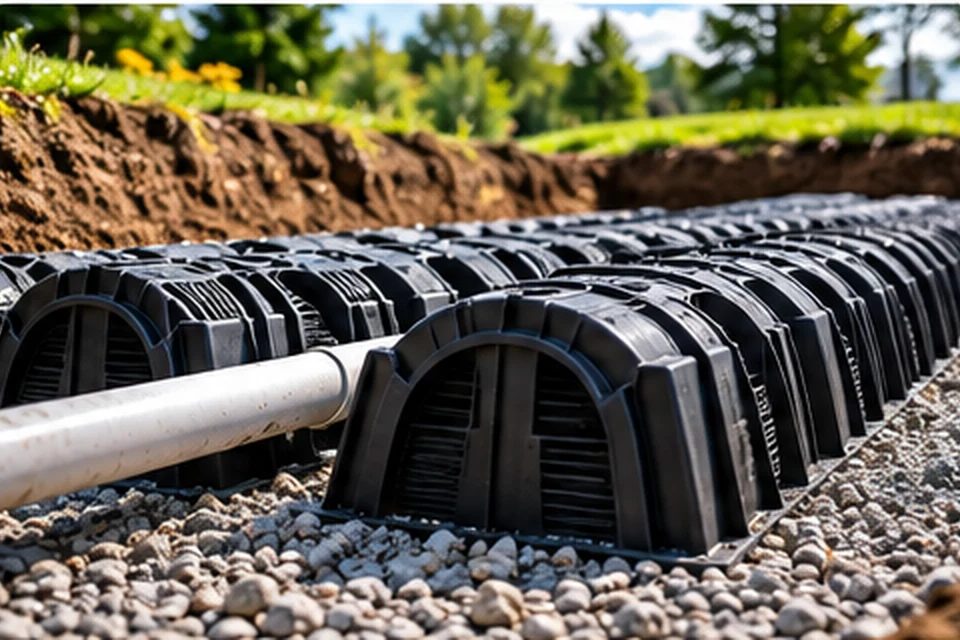
A chamber septic system is a septic system whose drain field uses open-bottom chambers instead of gravel. The U.S. EPA describes it as a gravelless alternative to the stone drain field, made of a series of connected chambers surrounded by soil; wastewater from the septic tank flows through pipes into the chambers, and microbes in the soil treat it. The EPA notes gravelless drain fields have been in use for over 30 years and can be made from recycled materials.
Everything upstream of the drain field, including the septic tank, stays the same as in a conventional septic system. The difference is what holds the effluent against the soil: a trench of stone in a conventional system, a row of hollow plastic arches in a chamber system.
How does a chamber septic system work?
A chamber septic system moves wastewater through three stages.
- Septic tank. Solids settle out as sludge and scum, and clarified effluent leaves the tank. See how septic systems work for this stage.
- Chambers. The National Small Flows Clearinghouse (NSFC) explains that a 4-inch pipe carries effluent from the tank to the chambers, which are open-bottomed, dome-shaped units, usually high-density plastic. The University of Nebraska–Lincoln Extension notes the chambers have slotted sidewalls, and the trench is backfilled with native soil.
- Soil treatment. Effluent spreads across the open bottom and through the slots into the soil. The University of Nebraska–Lincoln says substantial treatment occurs in the first 3 feet of soil below the drain field, where soil and air destroy pathogens and filter solids.
The NSFC adds that distribution pipes inside the chambers are optional, geotextile fabric is not needed, and each system should have at least one inspection port.
What does a septic chamber look like?
A septic chamber is a hollow, arch-shaped plastic unit with no bottom, laid end to end in a trench. The NSFC reports that chamber widths range from 15 to 40 inches and that designs are proprietary to each manufacturer. Most are high-density plastic, though the NSFC notes fiberglass, block or brick are possible. The University of Nebraska–Lincoln notes plastic chambers are lightweight and can be carried to remote or hard-to-reach sites; the NSFC says chamber panels can be carried by hand.
What is the difference between gravelless pipe and chamber systems?
Gravelless drain fields come in two forms: wrapped pipe and chambers. The University of Nebraska–Lincoln Extension describes a gravelless pipe drain field as corrugated pipe wrapped in synthetic filter fabric, and a gravelless chamber drain field as nondegradable, typically plastic, chambers. The NSFC notes one pipe design uses corrugated plastic pipe with 8- to 10-inch inside diameters covered in geotextile or spun-bonded nylon fabric, and that gravelless pipe systems need cleanouts so sludge can be flushed out and the pipe inspected. Chambers, by contrast, leave the trench bottom open so effluent meets the soil directly. Both types skip the gravel that a conventional drain field uses.
When is a chamber septic system used?
A chamber septic system is used on sites that could take a conventional drain field, plus a few where gravel is impractical. The EPA lists these situations:
- Areas with high water tables.
- Homes with variable loads, such as vacation homes.
- Areas where gravel is scarce or costly to deliver.
The NSFC adds sloped and wooded sites that heavy equipment cannot reach, and soils prone to smearing or compaction from gravel trucks. Angi notes chamber systems suit small lots but are generally not ideal for sandy soil. Whether a chamber design is permitted, and how large it must be, is set by state and local rules; see septic licensing for your state.
How much does a chamber septic system cost in 2026?
A chamber septic system usually costs more than a conventional gravel system and less than mound or aerobic systems.
| Publisher (date) | Chamber system cost | Conventional for comparison |
|---|---|---|
| HomeAdvisor (June 2026) | $5,000–$12,000; average $8,500 | $3,000–$8,000 (anaerobic) |
| Angi (July/August 2026) | $5,000–$12,000 | $3,000–$8,000 (conventional anaerobic) |
| Fixr (January 2025) | $3,500–$10,000 | $2,000–$10,000 (conventional) |
The NSFC explains the trade-off: gravel-lined systems are usually cheaper overall, except where gravel is expensive or scarce, and lower labor and transport costs for chambers may offset their higher material cost. Angi likewise says chambers are less cost-effective where gravel is readily available. See septic system installation cost for the rest of the bill.
What are the pros and cons of a chamber septic system?
A chamber septic system’s advantages come from removing gravel; its main drawback is price.
Advantages
- Easier to deliver and build, and suited to high water tables and variable loads (EPA).
- No gravel fines to clog the soil, and less compaction from gravel trucks and loaders (NSFC).
- Lightweight parts that can go where heavy machinery cannot (NSFC, University of Nebraska–Lincoln).
- Large storage volume inside the chambers, which helps absorb surge loads from guests, leaks or heavy rain, though the NSFC notes prolonged storage can harm soil performance.
- Can be made from recycled materials (EPA).
Disadvantages
- Cost is the main drawback where gravel is cheap (NSFC, Angi).
- Generally not ideal for sandy soil (Angi).
- Chambers can collapse if vehicles drive over them (Angi).
Do chamber septic systems need a smaller drain field?
A chamber septic system may or may not get a smaller drain field, depending on where you live. The NSFC reports that several states allow smaller drain fields for chamber systems, which lowers costs on small lots, but that the EPA and several state health agencies do not endorse reducing drain field area for gravelless or chamber systems, citing insufficient scientific evidence and the risk of higher organic loading. The NSFC also notes that a chamber design does not change a lot’s overall hydraulic capacity. Ask your local permitting office what applies.
Chamber vs. conventional septic system: which is better?
A chamber septic system and a conventional gravel system treat wastewater the same way: in the tank, then in the soil. The choice usually comes down to site access, gravel availability and local rules. Chambers win on tight or remote lots, high water tables and places where clean gravel is costly; gravel usually wins on price where stone is cheap and trucks can reach the site. The NSFC advises comparing prices for both before choosing. Compare every option in types of septic systems.
How do you maintain a chamber septic system?
A chamber septic system needs the same maintenance as a conventional drain field, according to the NSFC.
- Inspect or pump the septic tank every 3 to 5 years (NSFC); Angi gives the same pumping interval.
- Do not drive, park, pave or build on the chambers (NSFC, Angi).
- Keep grass over the drain field to maintain aeration (NSFC).
- Point downspouts away from the field (Angi).
- Put grease, food scraps, wipes and coffee grounds in the trash, not the drain (NSFC, Angi).
- Fix leaky faucets and running toilets promptly (NSFC).
Protecting the drain field is the main job, since it is the part that is costly to replace.
How long does a chamber septic system last?
No source reviewed gives a separate lifespan for chamber systems; Angi and the NSFC do not state one. The EPA puts the average lifespan of a septic system at 15 to 40 years, and longer with proper maintenance.
Find a licensed chamber system installer
Chamber systems are proprietary products that must be installed to the manufacturer’s instructions and your permit. Find a licensed septic company in The Septic Guide’s directory and check the installer’s license with your state before work starts.
Common questions
How does a chamber septic system work?
A chamber septic system works like a conventional system except for the drain field. Effluent leaves the septic tank and flows into rows of open-bottom chambers set in trenches and surrounded by soil, and the EPA explains that microbes in that soil treat the wastewater. The chambers replace the gravel that a conventional drain field uses to hold effluent against the soil.
How much does a chamber septic system cost?
A chamber septic system costs $5,000 to $12,000 according to HomeAdvisor (June 2026), which gives an $8,500 average; Angi (2026) lists the same range. Fixr (January 2025) lists $3,500 to $10,000 for a chamber system serving a three- or four-bedroom home. Chamber systems usually cost more than a conventional gravel system except where gravel is expensive or hard to get.
Are chamber septic systems better than gravel?
Chamber septic systems are better than gravel on some sites, not all. The EPA says chambers are easier to deliver and build and suit high water tables and areas where gravel is scarce, and the National Small Flows Clearinghouse notes they avoid gravel fines that can clog soil. The same source says cost is the main drawback, since gravel systems are usually cheaper where gravel is readily available.
Can you drive over a chamber septic system?
No vehicle should drive or park over a chamber septic system. Angi warns that the chambers can collapse under vehicle weight, and the National Small Flows Clearinghouse advises against driving on, paving over, building on or placing heavy materials on chamber drain fields. Keep the area in grass.
Do chamber septic systems need less space?
Chamber septic systems sometimes need less trench area, depending on the state. The National Small Flows Clearinghouse reports that several states allow smaller drain fields for chamber systems, but that the EPA and several state health agencies do not endorse reducing drain field area, citing insufficient evidence. Check your state and county rules before assuming a smaller footprint.
Sources
- Types of Septic Systems (archived January 19, 2025), U.S. Environmental Protection Agency. Accessed October 20, 2026. Chamber systems: gravelless, connected chambers; used for over 30 years; can be made from recycled materials
- Residential Onsite Wastewater Treatment: Gravelless Drainfields for Effluent Treatment (G1480), University of Nebraska–Lincoln Extension. Accessed October 20, 2026. Plastic chambers with slotted sidewalls; lightweight; backfilled with native soil; substantial treatment in first 3 feet of soil
- Gravelless and Chamber Systems: Alternative Drainfield Designs (Pipeline, Summer 2001), National Small Flows Clearinghouse (West Virginia University). Accessed October 20, 2026. Chamber widths 15-40 inches; 4-inch inlet pipe; cost is main drawback; EPA and some states do not endorse area reductions
- Everything You Need to Know About a Chamber Septic System, Angi. Accessed October 20, 2026. Chamber installation $5,000-$12,000; not ideal for sandy soil; do not drive over chambers (July 2026)
- How Much Does a Septic System or Tank Cost?, HomeAdvisor. Accessed October 20, 2026. Chambered $5,000-$12,000, average $8,500 (June 2026)
- How Much Does It Cost to Install a Septic Tank System?, Fixr. Accessed October 20, 2026. Chamber $3,500-$10,000 for a 1,000-gallon system (Jan 2025)
- New Homebuyer's Guide to Septic Systems, U.S. Environmental Protection Agency. Accessed October 20, 2026. Average septic system lifespan 15-40 years