The short answer
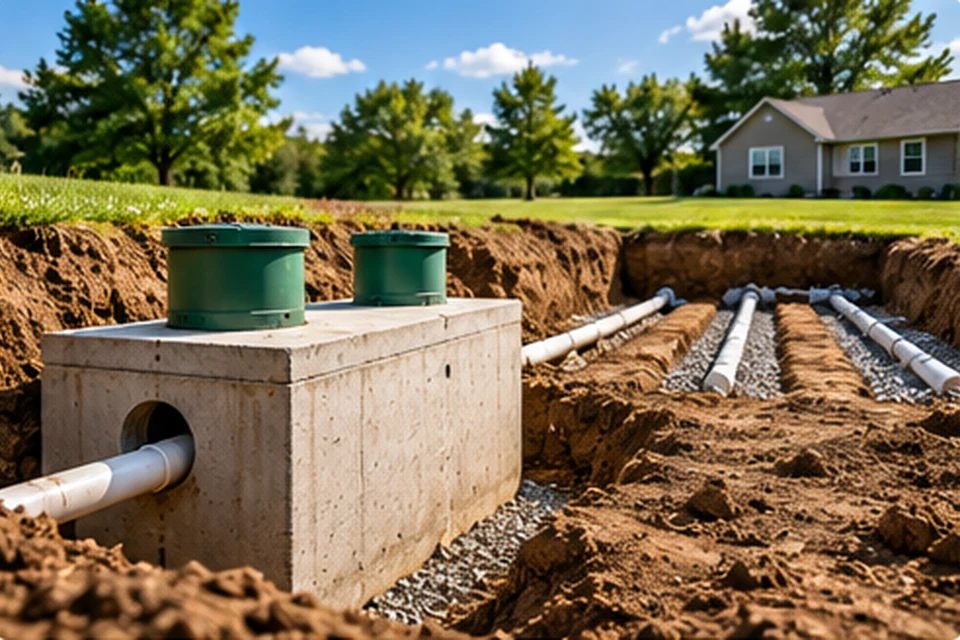
A conventional septic system is a buried septic tank connected to a gravel or stone drain field, with effluent filtered by microbes in the soil below, as the U.S. EPA describes it. It typically runs on gravity with no pumps, serves a single-family home or small business, and needs a large area of suitable soil. HomeAdvisor and Angi (2026) both put a conventional anaerobic system at $3,000 to $8,000 installed.
A conventional septic system is a septic tank connected to a gravel or stone drain field, with the soil underneath doing the final treatment. The U.S. EPA describes it as effluent flowing from the tank through pipes into shallow trenches of gravel or stone, with fabric laid over the stone to keep soil out; the effluent filters through the stone and microbes in the soil below treat it further. Texas A&M AgriLife Extension calls conventional septic systems traditionally the most commonly used technology for treating wastewater.
The EPA’s homebuyer guide sums up the layout in three parts: a septic tank, a distribution box and a drain field. Everything else on this page explains how those parts work, what a site needs to qualify and what the system costs.
How does a conventional septic system work?
A conventional septic system treats wastewater in the tank first and the soil second, with gravity moving it between the two.
- Septic tank. Wastewater from the house enters a buried, watertight tank. Solids settle to the bottom as sludge, oil and grease rise as scum, and baffles or a T-shaped outlet keep both in the tank, according to the EPA.
- Distribution box. The clarified effluent flows to a distribution box, which the EPA homebuyer guide describes as spreading wastewater through the drain field.
- Gravel drain field. Effluent flows through perforated pipes laid in trenches or beds of gravel or stone and seeps out into the soil.
- Soil treatment. The EPA says soil removes coliform bacteria, viruses and nutrients as wastewater percolates downward. The University of Nebraska–Lincoln Extension notes that substantial treatment occurs in the first 3 feet of soil below the drain field.
For a step-by-step look at the tank and its layers, see how septic systems work.
What does a conventional drain field look like?
A conventional drain field is a set of shallow trenches or a single bed filled with gravel or stone around perforated pipe. Penn State Extension describes two common layouts:
| Layout | Description (Penn State Extension) |
|---|---|
| Standard trenches | Perforated pipes in narrow trenches 12 to 72 inches wide that follow the land contours |
| Seepage bed | One rectangular excavation holding several perforated pipes, with 12 to 36 inches of aggregate |
In both layouts the pipes are laid on aggregate over suitable soil and covered with more aggregate, geotextile fabric and backfill, Penn State Extension explains. The EPA defines the drain field as a shallow, covered excavation in unsaturated soil, meaning there must be dry soil below it, not groundwater. See drain field for repair and replacement.
When is a conventional septic system used?
A conventional septic system is used where the lot has enough room and deep, well-draining soil above the water table. The EPA says a conventional system typically serves a single-family home or small business, but it has a large footprint and may not suit every site.
Whether a site qualifies is decided by testing, not by choice. The Pennsylvania DEP describes the typical process: a sewage enforcement officer examines the soil in a backhoe pit up to eight feet deep, runs percolation tests in the proposed absorption area, and approves a design based on the results. Penn State Extension notes that the permitted drain field type depends on lot size, soil, slope, geology, depth to groundwater and nearby wells. Exact separation distances and test standards are set by each state and county; see septic licensing for your state’s rules.
When a site fails, the designer moves to an alternative: a chamber septic system where gravel is scarce or the water table is high, a mound septic system where soil is shallow, or an aerobic treatment unit. Compare them all in types of septic systems.
How much does a conventional septic system cost in 2026?
A conventional septic system is the least expensive type to install. Cost publishers report these ranges:
| Publisher (date) | System as named | Price range |
|---|---|---|
| HomeAdvisor (June 2026) | Anaerobic (traditional) | $3,000–$8,000 installed |
| Angi (August 2026) | Conventional anaerobic | $3,000–$8,000 |
| Fixr (January 2025) | Gravity | $1,500–$4,000 |
| Fixr (January 2025) | Conventional | $2,000–$10,000 |
Fixr’s figures are for a 1,000-gallon tank serving a three- or four-bedroom home. HomeAdvisor lists related line items that can add to the bill: leach field installation at $5,000 to $12,000, a soil engineer for percolation testing at $700 to $2,000 and building permits at $450 to $2,300. See septic system installation cost for a full breakdown.
What are the pros and cons of a conventional septic system?
A conventional septic system trades low cost and simplicity for a big footprint and strict soil requirements.
Advantages
- Lowest installed cost of the common system types, per HomeAdvisor and Angi.
- No electricity or chemicals needed, Angi notes, because the system runs on gravity.
- Fewest moving parts to maintain.
Disadvantages
- Large footprint, according to the EPA, and not suitable for every site.
- Requires deep, unsaturated soil, which rules out sites with shallow bedrock or high groundwater.
- The drain field is the most expensive and difficult component to correct or replace, according to Penn State Extension.
Conventional vs. aerobic septic system: what is the difference?
A conventional septic system relies on anaerobic digestion in the tank and treatment in the soil, while an aerobic treatment unit (ATU) pumps air into the tank to boost bacterial activity before the effluent is dispersed. The EPA describes an ATU as a smaller-scale version of a municipal sewage plant that provides additional nutrient treatment, and says ATUs are used on small lots, poor soils, high water tables and sites near nutrient-sensitive water. The trade-offs are cost and upkeep: HomeAdvisor (2026) lists aerobic systems at $10,000 to $20,000 versus $3,000 to $8,000 for a traditional anaerobic system, Angi notes ATUs need electricity, and the EPA says ATUs need regular maintenance for their entire life. A conventional system is the default where the soil allows it; an ATU is the fix where it does not.
How do you maintain a conventional septic system?
A conventional septic system needs regular tank pumping to keep solids out of the drain field. The EPA homebuyer guide recommends inspection by a septic service provider every 3 to 5 years and pumping roughly every 3 to 5 years, or as local rules require. The EPA warns that a drain field receiving too much liquid can flood, sending sewage to the surface or backing it up into toilets and sinks.
Penn State Extension adds three drain field rules: divert roof and sump pump water away, keep heavy equipment and traffic off to avoid compaction, and keep trees away to prevent root clogging.
How long does a conventional septic system last?
A conventional septic system lasts 15 to 40 years on average, according to the EPA’s homebuyer guide, and can last longer with proper maintenance.
Find a licensed installer
A conventional septic system has to be designed to your site’s soil test and installed under permit. Find a licensed septic company near you in The Septic Guide’s directory, then verify the contractor’s license with your state before work begins.
Common questions
How does a conventional septic system work?
A conventional septic system works by gravity in two stages. Wastewater settles in the septic tank, where sludge sinks and scum floats, and the clarified effluent flows to a gravel or stone drain field. The EPA explains that the effluent filters through the stone and is treated further by microbes in the soil below.
How much does a conventional septic system cost in 2026?
A conventional septic system costs $3,000 to $8,000 installed according to both HomeAdvisor (updated June 2026) and Angi (updated August 2026), which list it as a conventional or traditional anaerobic system. Fixr (2025) lists $1,500 to $4,000 for a gravity system and $2,000 to $10,000 for a conventional system. Site work, permits and tank size push the final price up or down.
Does a conventional septic system need electricity?
A conventional gravity septic system does not need electricity. Angi notes a conventional anaerobic system needs no power or chemicals, because wastewater flows downhill from the house through the tank to the drain field. If the drain field sits uphill from the tank, a pump chamber is added and the system then depends on power.
What is the difference between a conventional and a chamber septic system?
A conventional septic system disperses effluent through perforated pipe in trenches filled with gravel or stone, while a chamber septic system replaces the gravel with open-bottom plastic chambers. The EPA says chamber systems are easier to deliver and build and suit high water tables and areas where gravel is scarce. HomeAdvisor (2026) lists chamber systems at $5,000 to $12,000 versus $3,000 to $8,000 for conventional anaerobic systems.
How long does a conventional septic system last?
A conventional septic system lasts 15 to 40 years on average, according to the U.S. EPA's New Homebuyer's Guide to Septic Systems, and can last longer with proper maintenance. The EPA recommends inspection and pumping roughly every 3 to 5 years to protect the drain field.
Sources
- Types of Septic Systems (archived January 19, 2025), U.S. Environmental Protection Agency. Accessed October 20, 2026. Conventional system: tank plus gravel/stone trench covered with fabric; large footprint
- How Septic Systems Work (archived January 19, 2025), U.S. Environmental Protection Agency. Accessed October 20, 2026. Drainfield is a shallow, covered excavation in unsaturated soil; flooding causes surfacing or backups
- Septic System Basics, Penn State Extension. Accessed October 20, 2026. Standard trenches 12-72 inches wide; seepage beds with 12-36 inches of aggregate; drain field is the most expensive component
- OWTS: Conventional Septic Tank/Drain Field (EL-5234), Texas A&M AgriLife Extension Service. Accessed October 20, 2026. Conventional systems traditionally the most commonly used technology
- How Much Does a Septic System or Tank Cost?, HomeAdvisor. Accessed October 20, 2026. Anaerobic (traditional) $3,000-$8,000; leach field $5,000-$12,000; permits $450-$2,300
- 9 Different Types of Septic Systems for Your Home, Angi. Accessed October 20, 2026. Conventional anaerobic $3,000-$8,000; needs no power or chemicals
- How Much Does It Cost to Install a Septic Tank System?, Fixr. Accessed October 20, 2026. Gravity $1,500-$4,000 and conventional $2,000-$10,000 for a 1,000-gallon system (Jan 2025)
- Residential Onsite Wastewater Treatment: Gravelless Drainfields for Effluent Treatment (G1480), University of Nebraska–Lincoln Extension. Accessed October 20, 2026. Substantial treatment occurs in the first 3 feet of soil below the drainfield
- New Homebuyer's Guide to Septic Systems, U.S. Environmental Protection Agency. Accessed October 20, 2026. Conventional system = tank, distribution box, drainfield; lifespan 15-40 years; inspect and pump every 3-5 years
- Understanding Septic Systems (Act 537 Fact Sheet #1), Pennsylvania Department of Environmental Protection. Accessed October 20, 2026. Soil profile exam (deep probe up to 8 feet) and percolation tests before a permit